Go Underground to Grow All Year Round 🌱
The Sunken Greenhouse That Uses the Earth to Regulate Temperature
Imagine harvesting fresh greens in the middle of winter—without expensive heating systems. The secret lies beneath your feet. A sunken greenhouse, also known as a walipini, uses the earth’s natural thermal mass to maintain stable temperatures year-round.
By building partially underground, you let nature do most of the work.
🌍 What Is a Sunken Greenhouse?
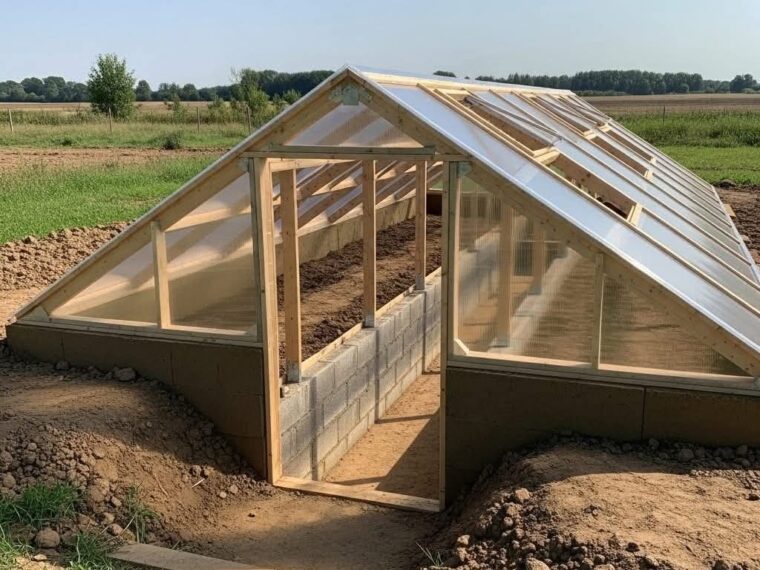
A sunken greenhouse is built 3–4 feet below ground level, using soil and earth walls to insulate the structure. The surrounding earth absorbs heat during the day and slowly releases it at night, keeping temperatures more stable than above-ground greenhouses.
This design has been used for generations in cold climates and is now gaining popularity among modern gardeners.
🔥 The Power of Thermal Mass
Thermal mass is any material that absorbs, stores, and releases heat slowly.
In a sunken greenhouse:
- Earth walls buffer against temperature swings
- Soil retains warmth even during freezing nights
- Daytime solar heat is stored naturally
This means warmer nights in winter and cooler days in summer.
🏗️ Basic Construction Overview
1. Digging the Site
- Dig down 3–4 feet (deeper in colder climates)
- Choose well-draining soil
- Avoid areas with high water tables
2. Stabilizing the Base
Line the base and walls with:
- Cinder blocks
- Concrete or stone
- Rammed earth (advanced option)
This prevents collapse and improves longevity.
3. Floor Preparation
- Add gravel for drainage
- Use stone or packed earth
- Consider raised beds for root insulation
☀️ Roof Design: Capture the Sun
The roof is critical to success.
- Angle the roof to face true south (north-facing in southern hemisphere)
- Use clear polycarbonate or greenhouse plastic
- Angle allows maximum winter sun exposure
The steep angle also sheds snow efficiently.
🌡️ Temperature Regulation Without Electricity
A well-built sunken greenhouse can:
- Stay above freezing in winter
- Avoid overheating in summer
- Reduce or eliminate heating costs
Additional thermal mass options include:
- Water barrels
- Stone walls
- Brick pathways
🌿 What You Can Grow Year-Round
With proper planning, you can grow:
- Leafy greens (lettuce, spinach, kale)
- Herbs (parsley, cilantro, chives)
- Root crops (carrots, beets)
- Cold-tolerant brassicas
Some gardeners even grow citrus in mild climates.
💧 Ventilation & Moisture Control
Even underground structures need airflow.
Include:
- Roof vents
- Side vents
- Manual or solar-powered fans
Good ventilation prevents mold and regulates humidity.
🛠️ Additional Tips for Success
- Insulate the north wall for added heat retention
- Use thermal curtains at night
- Monitor temperature with a thermometer
- Add compost beds for biological heat
🌟 Benefits of a Sunken Greenhouse
- Year-round food production
- Reduced energy costs
- Protection from wind and frost
- Longer growing seasons
- Greater resilience in extreme climates
🌱 Final Thoughts
Going underground isn’t about complexity—it’s about working smarter with nature. A sunken greenhouse uses the earth’s steady temperature and the sun’s energy to create a reliable growing environment all year long.
Dig a little deeper, and you’ll grow a lot more.