
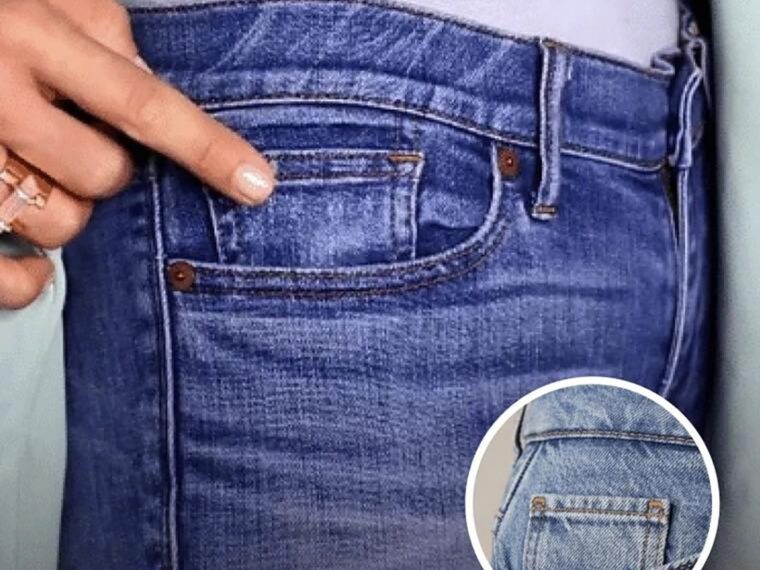
Have you ever slipped your hand into your jeans and stumbled upon that small, almost decorative jeans pocket? Too narrow for a phone, barely enough for a few parts… and yet still there. Intriguing, isn’t it? Behind this discreet detail lies a fascinating story, intimately linked to our lifestyles, our habits and even to a certain art of living of the past, far from our touch screens.
The small pocket of the jeans: a detail that is not trivial

At first glance, this mini-pocket may seem like a mere stylist’s whim or a useless remnant. And yet, it is one of the oldest elements of jeans as we know them. It appeared at the end of the nineteenth century, at a time when jeans were not a fashion piece, but a robust garment designed for everyday life and work.
Created by Levi Strauss & Co., this pocket had a very specific mission: to house a pocket watch. At the time, this accessory was essential to keep an eye on the time, whether you were a worker, a farmer or a shopkeeper. The watch, attached to a chain, slipped perfectly into this small pocket placed at the front of the trousers, within reach and well protected.
When the pocket watch dictated fashion
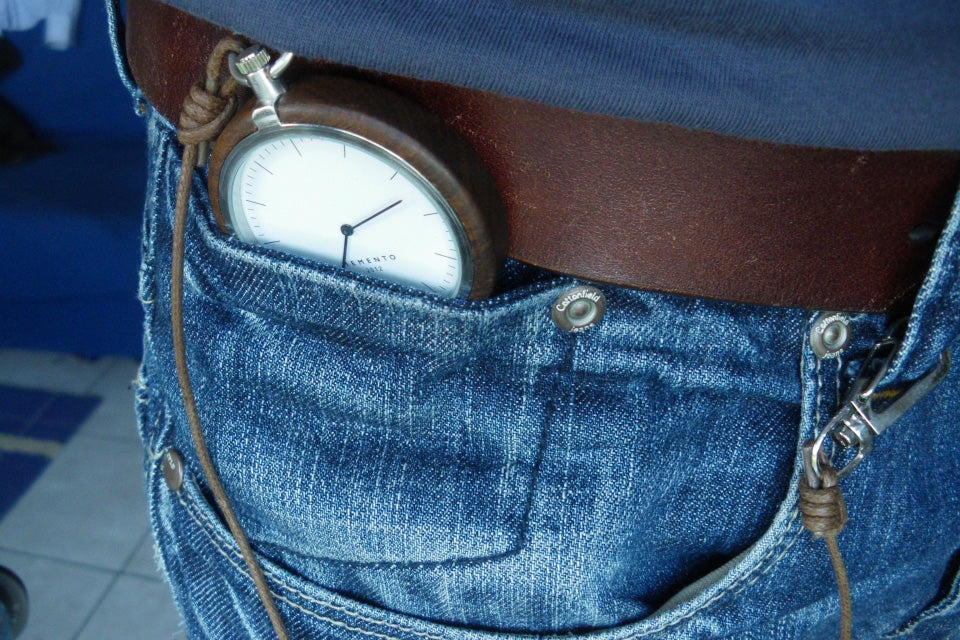
Before the advent of wristwatches and, much later, smartphones, the pocket watch was an everyday object, almost a symbol of punctuality and organization. The jeans therefore adapted to the real needs of those who wore them. This mini-pocket was neither decorative nor superfluous: it was for a specific purpose, like a secret drawer sewn into the fabric.
Interestingly, this pocket is not found on dressier pants. In elegant outfits, the watch was more likely to be stored in the pocket of the waistcoat, proof that jeans were already part of a practical and casual register, far from formal codes.
A design that has remained almost unchanged for more than a century
A design that has remained almost unchanged for more than a century
What fascinates is the longevity of this detail. Since the launch of the famous 501 model in the late 1800s, the structure of jeans has changed very little. The little pocket remained, even when its original purpose disappeared. Why? Out of respect for authenticity.
Keeping this pocket is a tribute to the origins of jeans. It’s a bit like keeping an old family recipe: we could modernize it, but we prefer to preserve what makes it charming. Apart from a few occasional adjustments, especially during the years of restrictions linked to the Second World War, jeans have stood the test of time without denying their DNA.
What is this mini-pouch really used for today?
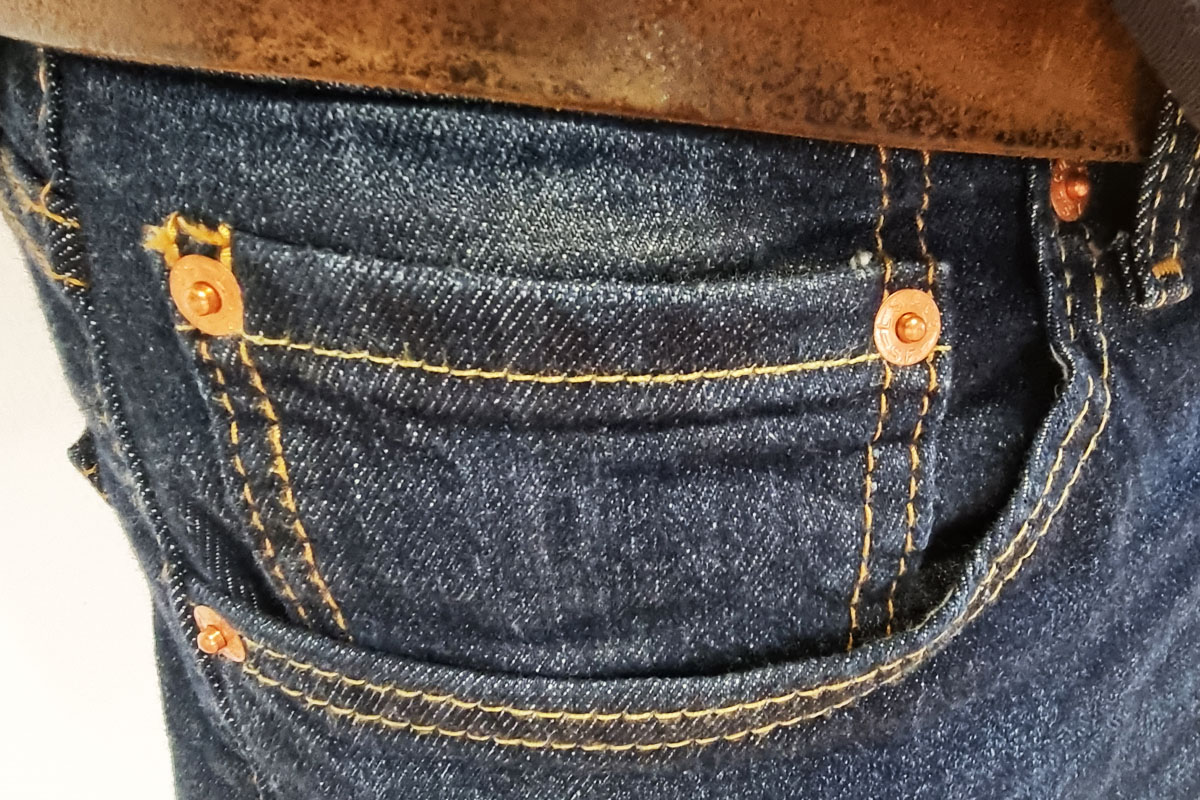
Let’s be honest: few of us still store a pocket watch in it. However, this little pocket still finds its place in our modern lives. It is ideal for slipping in a ring, a few coins, a key or even a small lucky charm. Some see it as a reassuring space, others a simple vintage nod that gives character to jeans.
Moreover, not all brands place it in exactly the same place. Some hide it in a larger pocket, others move it slightly, but the idea remains the same: to remind people that jeans are a garment designed for freedom of movement and simplicity.
A discreet symbol of our relationship with time
In the end, this mini-pocket tells much more than a fashion anecdote. It symbolizes the evolution of our uses, our relationship to time and objects. From a mechanical watch to an ultra-connected smartphone, our needs have changed, but jeans have remained true to their history.
What if we liked this little pocket so much precisely because it connects us to a simpler past, while continuing to accompany us on a daily basis?
So the next time you put on your favorite jeans, take a look at this story of jeans sewn into fabric: it’s proof that even the smallest details can stand the test of time in style.