Why This Simple Gardening Hack Is Going Viral
At first glance, placing aluminum foil around your plants might sound strange—maybe even pointless. After all, foil belongs in the kitchen, not the garden… right? But here’s the surprising truth: this simple, low-cost trick is gaining serious attention among gardeners, and for good reason.
People are constantly looking for natural, chemical-free ways to improve plant growth and protect their gardens. Aluminum foil checks both boxes. It’s cheap, easy to use, and incredibly versatile. In fact, many gardeners are now using it to boost growth, repel pests, and conserve moisture—all at once.
What makes this hack so appealing is that it doesn’t require any special skills. You don’t need expensive fertilizers or complicated tools. Just a roll of foil and a few minutes can make a noticeable difference in your garden.
And once you understand why it works, you’ll start seeing your plants—and your gardening routine—in a completely new way.
The Science Behind Aluminum Foil in the Garden
Let’s break it down in simple terms. Aluminum foil works because it reflects light and heat. And those two things—light and temperature—play a huge role in how plants grow.
When sunlight hits foil, it bounces back toward the plant. This reflected light reaches parts of the plant that normally stay in the shade, especially the underside of leaves. As a result, plants can perform more efficient photosynthesis, which can lead to stronger growth and healthier leaves.
At the same time, foil can help regulate soil conditions. It reflects excess heat away from the soil, preventing roots from overheating while also helping retain moisture.
Think of it like giving your plant a little “light boost” while keeping its roots comfortable.
Top Benefits of Using Aluminum Foil Around Plants
 1. Boosts Plant Growth Through Light Reflection
One of the biggest advantages of aluminum foil is how it enhances light exposure. By reflecting sunlight back onto the plant, it increases the amount of light available for photosynthesis.
This is especially useful in:
- Shady gardens
- Indoor plants
- Small spaces with limited sunlight
More light means more energy for the plant—and that often translates to faster growth and better yields.
 2. Naturally Repels Pests (Without Chemicals)
This is where things get really interesting. Many insects rely on visual cues to locate plants. The shiny surface of aluminum foil disrupts these signals, making it harder for pests to land and feed.
Foil can help deter:
- Aphids
- Whiteflies
- Thrips
- Slugs and snails
The reflection literally confuses insects, reducing infestations naturally.
 No chemicals, no sprays—just a simple visual trick.
 3. Helps Retain Soil Moisture
Water is one of the most important factors in plant health, and aluminum foil can help you manage it better.
By covering parts of the soil, foil reduces evaporation. That means your soil stays moist longer, and you don’t have to water as often.
This is especially helpful in:
- Hot climates
- Dry seasons
- Container gardening
 4. Regulates Soil Temperature
Extreme heat can stress plants, especially their roots. Aluminum foil reflects sunlight away from the soil, helping keep temperatures stable.
This prevents overheating and protects sensitive root systems.
 5. Keeps Birds and Animals Away
Gardeners often hang strips of foil around plants or trees. The movement and shine scare away birds and small animals that might otherwise eat your crops.
It’s a simple, non-harmful way to protect your harvest.
How to Use Aluminum Foil in Your Garden (Step-by-Step)
Using this trick is easier than you think. Here are a few simple methods:
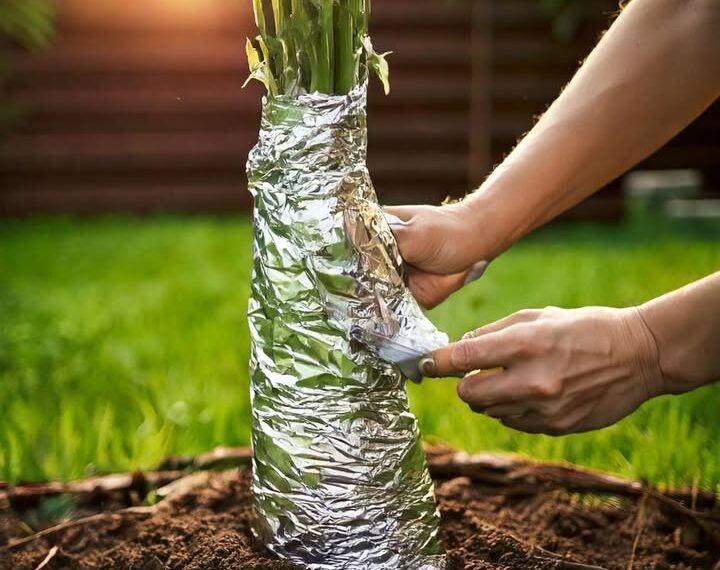
Method 1: Around the Base of Plants
- Wrap foil loosely around the stem
- Leave space for growth
- Make sure it’s not too tight
This creates a barrier against pests and protects the stem.
Method 2: On the Soil Surface
- Place foil around the base of the plant
- Cut holes for the stem
- Anchor it with soil or small stones
This helps with moisture retention and weed control.
Method 3: Hanging Strips
- Cut strips of foil
- Hang them near plants or trees
Great for deterring birds and insects.
Tools You Can Use (Get It on Amazon)
To make this hack even easier and more effective, here are some helpful tools:
- Aluminum foil rolls — get it on Amazon
- Garden scissors — get it on Amazon
- Plant stakes for hanging foil — get it on Amazon
- Soil moisture meter — get it on Amazon
These small tools can improve your setup and give you better results.
Things to Watch Out For (Important!)
As useful as this trick is, it’s not perfect. There are a few things to keep in mind:
- Too much reflection can increase heat in very hot climates
- Foil can block water if placed incorrectly
- It’s not eco-friendly if used excessively
Also, foil should be used as a temporary or complementary solution, not a permanent replacement for proper gardening practices.
Why Gardeners Love This Hack
This trick is popular because it solves multiple problems at once:
- Improves growth
- Reduces pests
- Saves water
- Costs almost nothing
It’s rare to find a solution that’s this simple and this effective.
Conclusion
Aluminum foil might seem like an unlikely gardening tool, but once you understand how it works, it makes perfect sense. By reflecting light, repelling pests, and conserving moisture, it gives your plants a real advantage—without chemicals or expensive products.
Sometimes, the smartest solutions are the simplest ones.
So next time you’re in your garden, grab a roll of foil… and try it for yourself.
FAQs
1. Does aluminum foil really help plants grow?
Yes, it reflects light and improves photosynthesis, which can boost growth.
2. Can it replace pesticides?
It can reduce pests, but it’s best used alongside other methods.
3. Is it safe for all plants?
Mostly yes, but avoid overuse in very hot conditions.
4. How long should I leave it in the garden?
It’s best used temporarily and checked regularly.
5. Can I reuse the foil?
Yes, as long as it’s clean and not torn.