
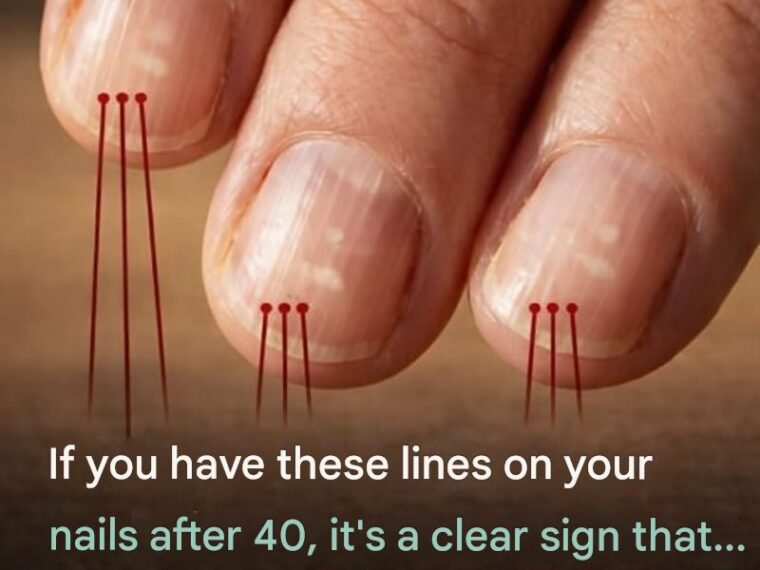
Many people start paying closer attention to changes in their bodies as they age, and the nails are one of the areas where subtle changes often appear first. If you notice vertical lines or ridges on your fingernails after the age of 40, you might wonder whether they are normal or a sign of an underlying health issue.
In most cases, these lines are completely harmless and a natural part of aging, but they can sometimes provide clues about your nutrition, hydration, or overall health. Understanding what these lines mean can help you decide whether you simply need better nail care or whether it’s time to consult a healthcare professional.
What Are the Lines on Your Nails?
The lines shown in the image are called vertical nail ridges. These ridges run from the cuticle to the tip of the nail and are quite common as people grow older.
They occur because the cells that produce the nail plate slow down over time, which can cause slight irregularities in the nail surface. As the nail grows, these small variations appear as vertical lines.
Unlike horizontal grooves, vertical ridges are usually not a sign of disease.
Why They Often Appear After 40
After the age of 40, the body naturally experiences several changes that affect nails:
1. Natural Aging Process
Just like wrinkles on the skin, nail ridges can develop with age. The nail matrix—the area where nails grow—produces cells less efficiently over time.
2. Reduced Moisture
Aging nails tend to become drier and more brittle, making ridges more visible.
3. Slower Nail Growth
Nails grow more slowly as we age, which can make imperfections more noticeable.
Nutritional Factors That May Contribute
Although aging is the most common cause, vertical ridges can sometimes be linked to nutritional deficiencies.
Some nutrients that influence nail health include:
- Iron – Helps prevent brittle nails
- Biotin (Vitamin B7) – Supports nail strength
- Vitamin B12 – Essential for healthy nail growth
- Magnesium – Important for protein synthesis
- Protein – Nails are primarily made of keratin, a protein
A poor diet or certain health conditions may make ridges more pronounced.
Other Possible Causes
While most vertical ridges are harmless, other factors may also contribute:
Dehydration
Insufficient water intake can make nails dry and highlight ridges.
Frequent Hand Washing
Constant exposure to water and soaps can weaken the nail surface.
Nail Trauma
Minor injuries to the nail matrix can lead to irregular nail growth.
Skin Conditions
Conditions such as eczema or psoriasis can sometimes affect the nail surface.
When Nail Lines Might Be a Warning Sign
Although vertical ridges are usually normal, you should pay attention if they are accompanied by other symptoms, such as:
Although vertical ridges are usually normal, you should pay attention if they are accompanied by other symptoms, such as:
- Sudden changes in nail color
- Deep grooves or splits
- Pain or swelling around the nail
- Thickening or distortion of the nail
These symptoms may indicate issues like fungal infections, anemia, or other medical conditions, and it may be wise to consult a doctor.
Tips to Improve Nail Health
If you want smoother and healthier nails, the following habits can help:
Stay Hydrated
Drink enough water throughout the day to maintain moisture in your nails.
Eat a Balanced Diet
Include foods rich in vitamins and minerals such as:
- Eggs
- Nuts
- Leafy greens
- Fish
- Whole grains
Moisturize Your Nails
Use hand creams or natural oils such as almond oil or coconut oil to keep nails hydrated.
Avoid Harsh Chemicals
Wear gloves when cleaning or using strong detergents.
Consider Biotin Supplements
Biotin may help strengthen nails in some individuals, but always consult a healthcare professional first.
Simple Nail Care Routine
A basic routine can significantly improve nail appearance:
- Trim nails regularly.
- Gently buff the nail surface if ridges are prominent.
- Apply moisturizing oil daily.
- Avoid excessive nail polish remover use.
With proper care, many nail ridges become less noticeable over time.
The Bottom Line
Seeing vertical lines on your nails after 40 is very common and usually harmless. These ridges are often just a natural result of aging and changes in nail growth. However, they can also reflect aspects of your lifestyle, such as nutrition, hydration, and nail care habits.
If the lines are mild and painless, they are generally nothing to worry about. But if they appear suddenly or come with other unusual symptoms, it’s always a good idea to seek professional advice.
Your nails can act like small windows into your overall health, so paying attention to them is a simple but valuable habit.


