🦇 “I’m Just a Bat” — Why These Misunderstood Creatures Deserve Our Kindness
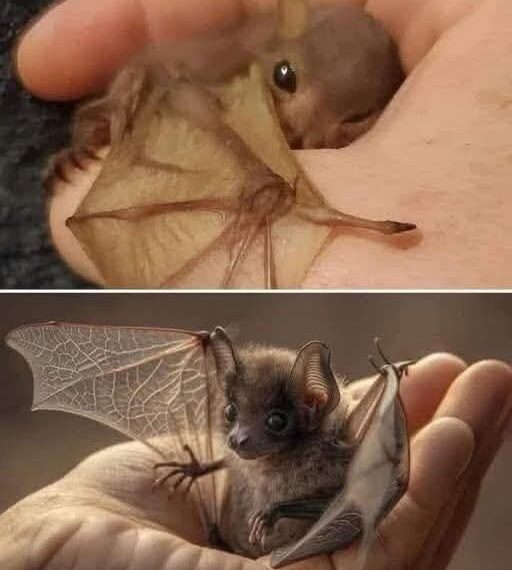
“Hi… I’m just a bat.”
It’s a sentence that might sound unusual, even a little unsettling. For many people, bats are creatures of fear—associated with darkness, myths, and danger. But behind that fear is a truth that often goes unnoticed:
Bats are not here to harm us.
They’re simply trying to survive.
The Fear vs. The Reality
For generations, bats have been misunderstood. Stories and movies have painted them as aggressive, dangerous, even supernatural. But in reality, most bats are harmless to humans.
They don’t:
- Drink human blood
- Intentionally fly into your hair
- Attack people
If a bat enters your home, it’s not because it wants to scare you—it’s because it got lost.
Imagine being a small, nocturnal animal navigating through lights, noise, and unfamiliar spaces. One wrong turn, and suddenly it’s inside a human home, surrounded by fear and confusion.
A Frightened Animal, Not a Threat
When a bat flies into a room, it often appears erratic—circling, darting, moving unpredictably. But this isn’t aggression.
It’s panic.
The bat is trying to find its way out, using its natural navigation system in an environment it doesn’t understand. Bright indoor lights and closed spaces confuse it even more.
And when people react with fear—grabbing brooms or sticks—it only makes the situation worse.
Because in that moment, the bat is not dangerous.
It’s vulnerable.
What to Do If a Bat Enters Your Home
Instead of reacting with fear, a calm and simple approach can safely solve the situation—for both you and the bat.
If a bat flies into your house:
- 🔌 Turn off the lights inside
- 💡 Turn on a light outside
- 🚪 Open a door or window
In most cases, the bat will naturally move toward the light and find its way out within minutes.
If it lands and cannot fly:
- Stay calm
- Gently place a towel or cloth over it
- Carefully carry it outside and release it
No harm. No panic. Just kindness.
Why Bats Are Actually Helpful
Bats play a vital role in our ecosystem, even if we rarely notice it.
A single bat can eat hundreds—even thousands—of insects in one night, including mosquitoes. This helps:
- Control insect populations
- Reduce the spread of certain diseases
- Protect crops and gardens
In many ways, bats are natural pest control—quietly helping humans every night.
A Bigger Problem: Losing Their Homes
One of the main reasons bats end up in human spaces is simple:
They are running out of places to live.
As forests are cleared and natural habitats are destroyed to make way for buildings and cities, bats lose their shelter. With fewer safe places to roost, they are forced closer to human environments.
So when a bat enters your home, it’s not invading your space—it may be the result of losing its own.
Kindness Makes the Difference
It’s easy to react with fear when something unfamiliar enters our space. But moments like these are also opportunities—to choose understanding over instinct.
A bat doesn’t want to hurt you.
It doesn’t want to stay in your home.
It just wants to leave safely and continue its life.
And sometimes, all it needs is a little help.
Final Thoughts
Being human is not just about intelligence or progress—it’s about compassion.
Even toward the smallest, most misunderstood creatures.
So the next time a bat finds its way into your home, remember:
It’s not a threat.
It’s not an enemy.
It’s just a living being… trying to survive in a changing world.
🖤 Be calm.
🖤 Be kind.
🖤 Let it live.