
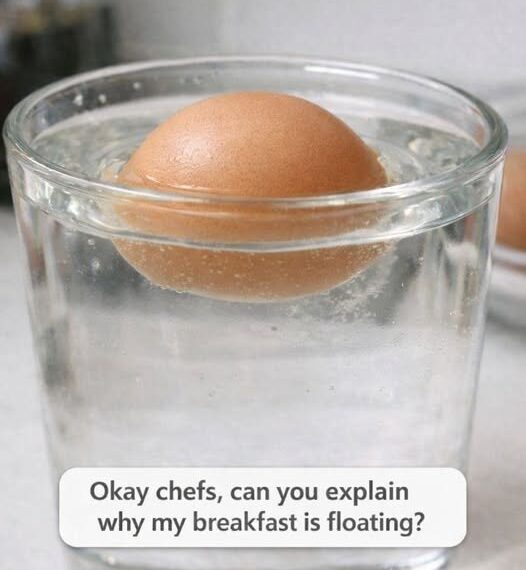
Have you ever cracked open an egg for breakfast, only to find it floating in your bowl of water? This curious phenomenon can be both intriguing and concerning, especially when you’re unsure about the safety of your breakfast. Eggs are a staple in many kitchens across the globe, and their preparation and consumption are often surrounded by various myths and folklore. Understanding the science behind why eggs float can not only save you from potential foodborne illnesses but also teach you more about this versatile ingredient.
In a world where viral trends and online hacks often dictate our kitchen experiments, the egg float test has emerged as a simple yet effective method to determine the freshness of eggs. However, not everyone is aware of the nuances involved in this test. This article aims to delve deeper into why your breakfast might be floating, and how you can interpret these signs to ensure you’re consuming safe and fresh eggs.
1. The Viral Egg Float Test: What Your Breakfast Is Telling You
The egg float test has gained popularity as a quick way to assess the freshness of eggs with little to no equipment. The premise is straightforward: place an egg in a bowl or glass of water, and observe its behavior. If the egg sinks to the bottom and lays flat on its side, it is considered fresh. If it stands upright or floats, it may be older or even spoiled.
When conducting this test, it’s crucial to use a container deep enough to allow the egg to fully submerge and move freely. The water should be at room temperature, as using cold or hot water can affect the results. The test works because as eggs age, the small air cell inside them grows larger, affecting their buoyancy.
2. The Science Of Floaters: Air Cells, Density, And Buoyancy
Eggs are marvels of natural engineering, consisting of a shell, a membrane, and contents that are primarily water and proteins. Inside the egg, there’s a small air cell that forms as soon as the egg is laid. Over time, moisture and carbon dioxide inside the egg evaporate through the shell’s pores, causing the air cell to enlarge. This increase in the air cell’s size decreases the egg’s overall density, causing it to become buoyant.
The principle of buoyancy explains why older eggs tend to float. The larger the air cell, the higher the likelihood of the egg rising to the surface when placed in water. This natural process is a key indicator of an egg’s age, providing a tangible way to assess freshness without breaking the shell.
3. Fresh, Older, Or Rotten? How To Read An Egg’s Position In Water
An egg’s position in water can provide a snapshot of its freshness. Fresh eggs will lie flat on the bottom of the bowl, while slightly older eggs may tilt upwards or stand on one end. This standing position indicates a moderate enlargement of the air cell, signifying an egg that is still safe but should be used soon.
Floating eggs are generally considered spoiled or at the very least, very old. The large air cell inside a floating egg indicates significant moisture loss, and it is best to err on the side of caution and discard such eggs. Keep in mind that while the float test is a helpful guide, it should be accompanied by other sensory checks to ensure safety.
4. When Floating Is Fine: Situations Where Your Egg May Still Be Safe
In certain scenarios, a floating egg may still be safe to consume. For example, a slightly floating egg that remains submerged in water but does not reach the surface may still be good for cooking. These eggs are often ideal for hard boiling, where the egg’s texture and flavor are less impacted by its age.
It’s important to combine the float test with other checks, such as cracking the egg open and examining its smell and appearance. If an egg passes these additional checks despite floating, it can be used in dishes where eggs are thoroughly cooked, minimizing the risk of any potential foodborne illness.
5. The Red Flags: Smell, Color, And Texture Checks After The Float Test
Once an egg has undergone the float test, further examination is crucial to confirm its edibility. Cracking the egg open onto a clean surface can reveal much about its quality. A fresh egg will have a bright, slightly domed yolk and a thick, cloudy white. If the yolk is flat and the white is runny or watery, the egg is likely old.
continued on next page
Have you ever cracked open an egg for breakfast, only to find it floating in your bowl of water? This curious phenomenon can be both intriguing and concerning, especially when you’re unsure about the safety of your breakfast. Eggs are a staple in many kitchens across the globe, and their preparation and consumption are often surrounded by various myths and folklore. Understanding the science behind why eggs float can not only save you from potential foodborne illnesses but also teach you more about this versatile ingredient.
In a world where viral trends and online hacks often dictate our kitchen experiments, the egg float test has emerged as a simple yet effective method to determine the freshness of eggs. However, not everyone is aware of the nuances involved in this test. This article aims to delve deeper into why your breakfast might be floating, and how you can interpret these signs to ensure you’re consuming safe and fresh eggs.
1. The Viral Egg Float Test: What Your Breakfast Is Telling You
The egg float test has gained popularity as a quick way to assess the freshness of eggs with little to no equipment. The premise is straightforward: place an egg in a bowl or glass of water, and observe its behavior. If the egg sinks to the bottom and lays flat on its side, it is considered fresh. If it stands upright or floats, it may be older or even spoiled.
When conducting this test, it’s crucial to use a container deep enough to allow the egg to fully submerge and move freely. The water should be at room temperature, as using cold or hot water can affect the results. The test works because as eggs age, the small air cell inside them grows larger, affecting their buoyancy.
2. The Science Of Floaters: Air Cells, Density, And Buoyancy
Eggs are marvels of natural engineering, consisting of a shell, a membrane, and contents that are primarily water and proteins. Inside the egg, there’s a small air cell that forms as soon as the egg is laid. Over time, moisture and carbon dioxide inside the egg evaporate through the shell’s pores, causing the air cell to enlarge. This increase in the air cell’s size decreases the egg’s overall density, causing it to become buoyant.
The principle of buoyancy explains why older eggs tend to float. The larger the air cell, the higher the likelihood of the egg rising to the surface when placed in water. This natural process is a key indicator of an egg’s age, providing a tangible way to assess freshness without breaking the shell.
3. Fresh, Older, Or Rotten? How To Read An Egg’s Position In Water
An egg’s position in water can provide a snapshot of its freshness. Fresh eggs will lie flat on the bottom of the bowl, while slightly older eggs may tilt upwards or stand on one end. This standing position indicates a moderate enlargement of the air cell, signifying an egg that is still safe but should be used soon.
Floating eggs are generally considered spoiled or at the very least, very old. The large air cell inside a floating egg indicates significant moisture loss, and it is best to err on the side of caution and discard such eggs. Keep in mind that while the float test is a helpful guide, it should be accompanied by other sensory checks to ensure safety.
4. When Floating Is Fine: Situations Where Your Egg May Still Be Safe
In certain scenarios, a floating egg may still be safe to consume. For example, a slightly floating egg that remains submerged in water but does not reach the surface may still be good for cooking. These eggs are often ideal for hard boiling, where the egg’s texture and flavor are less impacted by its age.
It’s important to combine the float test with other checks, such as cracking the egg open and examining its smell and appearance. If an egg passes these additional checks despite floating, it can be used in dishes where eggs are thoroughly cooked, minimizing the risk of any potential foodborne illness.
5. The Red Flags: Smell, Color, And Texture Checks After The Float Test
Once an egg has undergone the float test, further examination is crucial to confirm its edibility. Cracking the egg open onto a clean surface can reveal much about its quality. A fresh egg will have a bright, slightly domed yolk and a thick, cloudy white. If the yolk is flat and the white is runny or watery, the egg is likely old.
continued on next page
The smell is another critical indicator. A bad egg will emit a distinct sulfuric odor, which is unmistakably foul. If there’s any doubt after these sensory checks, it’s best to discard the egg. Ensuring that eggs are safe to consume is paramount, and these simple checks are easy to integrate into your kitchen routine.
6. Fridge Habits That Quietly Turn Good Eggs Into Floaters
Improper storage can accelerate the aging process of eggs, turning fresh eggs into floaters prematurely. Eggs should be stored in the coldest part of the refrigerator, ideally at temperatures below 40°F (4°C). The refrigerator door is not an ideal spot, as it experiences frequent temperature fluctuations.
Another key practice is to store eggs in their original carton. The carton helps protect eggs from absorbing strong odors and flavors from other foods in the fridge, which can affect their quality. Additionally, keeping eggs in the carton helps maintain their moisture and slows down the enlargement of the air cell.
7. Cracked, Washed, Or Warmed: Handling Mistakes That Speed Up Spoilage
Handling eggs with care is essential to maintaining their freshness. Cracked eggs should be used immediately or discarded, as the breach in the shell allows bacteria to enter and spoil the egg quickly. Similarly, washing eggs can remove the protective bloom, a natural coating that prevents bacteria from penetrating the shell.
Allowing eggs to sit at room temperature for extended periods can also hasten spoilage. Eggs should be returned to the refrigerator promptly after purchase and after each use. Maintaining consistent cold storage conditions prevents the air cell from enlarging rapidly, preserving the egg’s freshness.
8. How Long Eggs Really Last: Sell-By Dates Vs. Actual Freshness
Egg cartons typically display a sell-by date, which indicates the period during which the eggs are at their peak quality. However, eggs can remain safe to consume for several weeks beyond this date if stored properly. In general, eggs can last 3 to 5 weeks in the refrigerator from the date of purchase.
To gauge actual freshness, the float test and sensory checks are more reliable than the sell-by date alone. Eggs that are well past their sell-by date but still pass these checks can be used without concern. Understanding the distinction between sell-by dates and true freshness can prevent unnecessary waste and ensure safe consumption.
9. Smart Shopping: Choosing Eggs Less Likely To Fail The Float Test