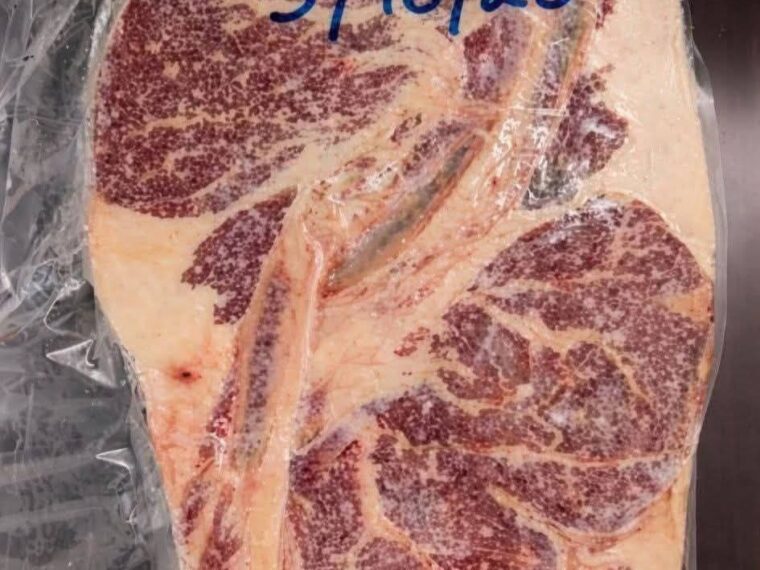
1. High Marbling = Maximum Flavor
Fat equals flavor. As the steak cooks, the intramuscular fat melts and bastes the meat from the inside, creating a juicy, buttery texture.
2. The Bone Adds Depth
The bone helps retain moisture and acts as a heat conductor, allowing the meat around it to cook evenly and stay tender.
3. Perfect for High-Heat Cooking
Because of its fat content, ribeye performs beautifully when seared at high temperatures. It forms a crispy, caramelized crust while remaining juicy inside.
Ingredients
1 thick-cut bone-in ribeye (2–2.5 inches thick, about 2–3 lbs)
Kosher salt (generous amount)
Freshly ground black pepper
2 tablespoons unsalted butter
2 garlic cloves, smashed
Fresh rosemary or thyme
1 tablespoon high smoke-point oil (avocado or olive oil)
Step 1: Preparing the Steak (Critical for Success)
1. Bring to Room Temperature
Remove the steak from the refrigerator 45–60 minutes before cooking. Cold meat cooks unevenly.
2. Pat Completely Dry
Moisture prevents browning. Use paper towels and dry thoroughly.
3. Season Generously
Coat both sides with kosher salt and black pepper. Don’t be shy — thick steaks need proper seasoning.
Pro Tip:
For even deeper flavor, salt the steak and let it rest uncovered in the refrigerator for 4–24 hours. This is called dry brining and enhances flavor and crust formation.
Method 1: Pan-Seared + Oven Finished (Professional Steakhouse Method)
This method gives you maximum crust with perfect interior doneness.
Step 1: Sear
Preheat oven to 400°F (200°C).
Heat a cast iron skillet over high heat for 3–5 minutes.
Add oil.
Place steak in the pan and DO NOT move it for 3–4 minutes.
You want a deep golden-brown crust. This is the Maillard reaction — the chemical process responsible for steakhouse flavor.
Step 2: Flip and Baste
Flip the steak.
Cook another 3 minutes.
Add butter, garlic, and herbs.
Tilt the pan and spoon melted butter over the steak continuously for 1–2 minutes.
This technique adds richness and aroma.
Step 3: Finish in Oven
Transfer the skillet to the oven.
Cook until internal temperature reaches:
Rare: 120–125°F (50–52°C)
Medium Rare: 130–135°F (54–57°C) Best choice
Medium: 140–145°F (60–63°C)
Medium Well: 150°F (65°C)
Well Done: 160°F+ (70°C+)
Use a meat thermometer inserted into the thickest part.
Resting the Steak (Do NOT Skip)
After removing from heat, let the steak rest for 10 minutes.
During cooking, juices move toward the center. Resting allows them to redistribute throughout the meat.
Cutting too early = dry steak.
Alternative Method: Grilling Over Charcoal
If you love smoky flavor, grilling is incredible for ribeye.
Direct Heat Sear
Preheat grill to high (450–500°F).
Grill 4–5 minutes per side.
Indirect Finish
Move to indirect heat.
Close lid and cook until desired internal temperature.
Charcoal enhances flavor with natural smokiness that pairs beautifully with ribeye’s richness.
The Science Behind a Perfect Crust
The crust forms through the Maillard reaction, which happens above 300°F. Protein and sugars react to create complex flavor compounds.
To maximize crust:
Dry the surface
Use high heat
Avoid overcrowding
Don’t flip constantly
Common Mistakes to Avoid
Cooking straight from fridge
Not drying the steak
Using low heat
Flipping too often
Skipping the resting time
Overcooking
Best Side Dishes for Ribeye
Because ribeye is rich, it pairs best with sides that balance it.
Garlic mashed potatoes
Roasted asparagus
Grilled zucchini
Creamed spinach
Simple arugula salad
Crispy roasted potatoes
Sauce Ideas (Optional but Delicious)
Ribeye doesn’t need sauce, but these elevate it:
Garlic herb butter
Peppercorn cream sauce
Chimichurri
Red wine reduction
Blue cheese butter
Frequently Asked Questions
Is bone-in better than boneless?
Bone-in retains moisture slightly better and adds presentation value, but both are excellent.
How thick should ribeye be?
At least 2 inches thick for best results. Thin steaks overcook quickly.
Can I reverse-sear instead?
Yes. Cook slowly at 275°F until 115°F internal temp, then sear in a hot pan for 1–2 minutes per side.
Why is ribeye so tender?
It comes from a muscle group that does minimal work, resulting in less connective tissue.
Expert Chef Tips for Steakhouse Results
Use cast iron for best heat retention
Use a thermometer — guessing leads to overcooking
Let the pan fully preheat
Don’t press down on the steak
Choose USDA Prime or well-marbled Choice
Final Thoughts
The bone-in ribeye is often called the king of steaks for a reason.
When cooked properly, you get:
A crispy, caramelized crust
A juicy, tender center
Rich, buttery flavor
Steakhouse-quality results at home