
⚠️ This is for informational purposes only. For medical advice or diagnosis, consult a professional.
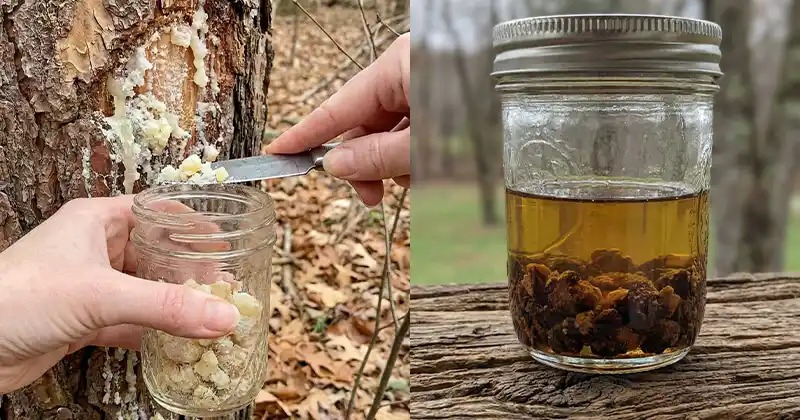
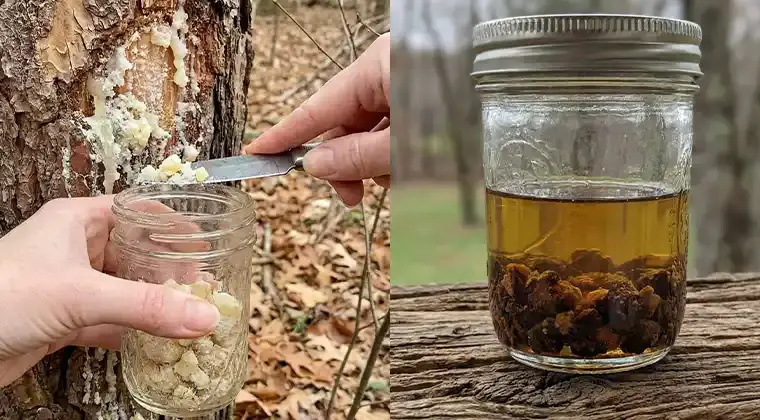
Pine resin (sometimes called “pine sap,” “pitch,” or “pine gum”) is the sticky, aromatic substance pines produce to protect themselves. When a branch breaks or bark is damaged, resin flows out, seals the wound, and helps defend the tree from insects, fungi, and bacteria. That same “self-healing” chemistry is why people have valued pine resin for centuries—both for practical survival uses and for homemade wellness-style preparations.
This article is a detailed, no-fluff guide to pine resin: what makes it “powerful,” how to collect it responsibly, how to clean it, and the best homemade uses you can actually do.
What Pine Resin Really Is
Pine resin is a complex mix of plant compounds, mainly:
- Terpenes (the strong pine smell): these are part of the tree’s defense system.
- Resin acids (sticky, protective): these help resin harden into a durable seal.
- Volatile oils (evaporate easily): responsible for aroma and “fresh pine” feel.
When resin is fresh, it’s gooey and sticky. Over time, it oxidizes and hardens, becoming more brittle and amber-like.
Why People Call It “Powerful”
Pine resin has a reputation for being “strong” because it’s naturally designed to:
- Seal and protect damaged tissue (in the tree)
- Discourage microbes from colonizing an open wound
- Trap or repel insects that try to invade
In practical human use, that translates into resin being valued for:
- Protective, barrier-style applications (salves, coatings)
- Deodorizing and freshening (aromatic compounds)
- Sticky strength (natural glues and fire-starting)
How to Harvest Pine Resin Responsibly
The best resin is collected from resin that’s already leaking (from natural wounds or old cuts), rather than cutting a healthy tree.
Good rules to follow:
- Don’t cut the tree just to get resin. Collect what has naturally formed.
- Avoid roadside trees (pollution can contaminate resin).
- Choose clean forest areas away from sprayed zones.
- Take small amounts from many trees instead of a lot from one tree.
- Leave plenty behind—the tree is using it for protection.
Simple tools:
- A small metal spoon or stick
- A glass jar (resin can melt plastics)
- Gloves (resin is stubborn)
How to Clean and Prepare Pine Resin (The Practical Method)
Raw resin often contains bark bits, needles, dust, and insects. Cleaning makes it far more usable.
Method: Low-Heat Melt and Strain
You’ll need:
- A small pot + heat-safe jar (or a double boiler)
- Cheesecloth or a fine metal strainer
- A second clean jar/tin
Steps:
TO CONTINUE READING THE ARTICLE PLEASE SEE PAGE 2