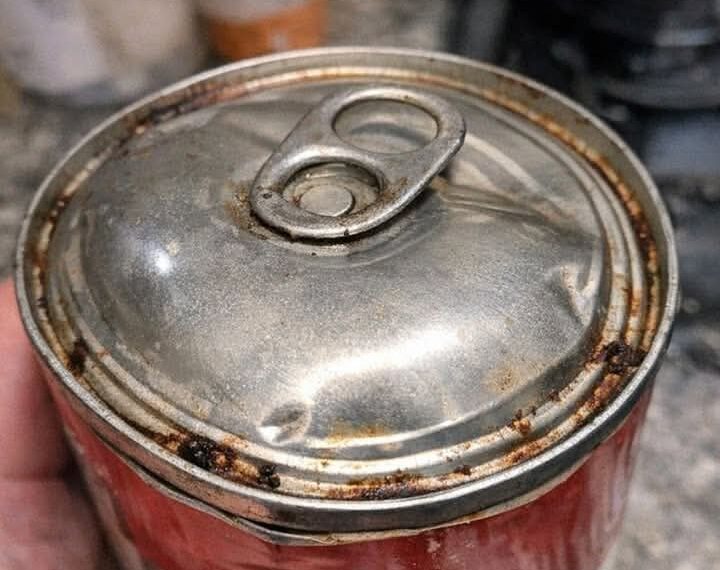
Rely on visual and olfactory cues to assess safety, and avoid tasting food from any can that raises concerns, no matter how minor they may seem.
8. What Food Safety Experts Recommend You Do Next
If you encounter a suspicious can, food safety experts recommend disposing of it safely and reporting it to the store where it was purchased. This can help prevent others from buying potentially dangerous products.
Experts also advise maintaining good hygiene practices, such as washing hands thoroughly after handling compromised cans, to prevent cross-contamination.
9. How to Handle and Dispose of Potentially Unsafe Cans
Dispose of potentially unsafe cans carefully to avoid any risk of contamination. Place the can in a sealed plastic bag before discarding it in the trash to contain any leakage.
Ensure that the area where the can was stored is cleaned and sanitized to remove any residue or bacteria that might have escaped from the compromised can.
10. Smart Shopping Habits to Avoid Problem Cans in the First Place
When shopping, inspect cans for any signs of damage before purchasing. Choose cans that are free from dents, rust, and swelling, focusing on those stored correctly on the shelves.
Avoid cans stored in places with temperature fluctuations, as this can affect the integrity of the seal. Opt for brands with a reputation for quality control to reduce the risk of encountering damaged cans.
11. Storing Canned Goods Safely to Prevent Future Issues
Store canned goods in a cool, dry place to maintain their integrity and prolong their shelf life. Keep them away from direct sunlight and areas with high humidity, which can lead to rust and compromise the can’s seal.
Organize your pantry to ensure older cans are used first, and regularly check for any signs of damage or spoilage. By practicing good storage habits, you can minimize the risk of encountering puffed or dented cans in the future.