
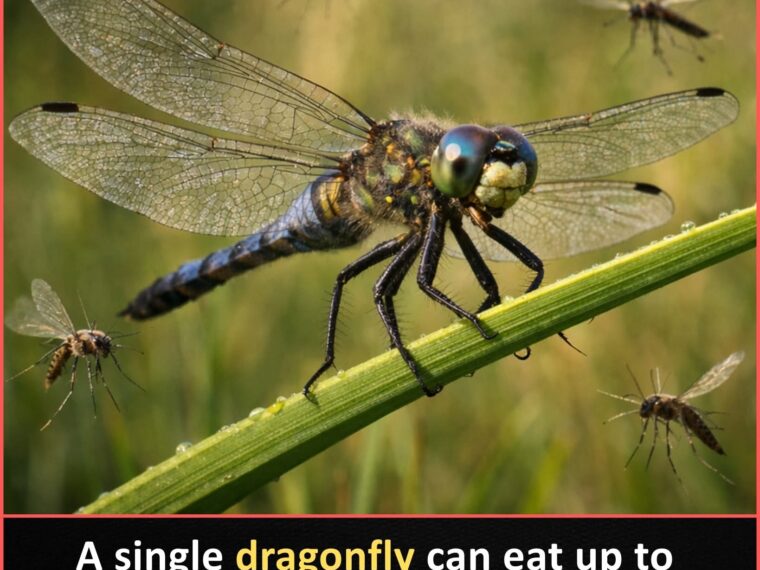
Silent, Swift, and Brutally Efficient: Nature’s Ultimate Mosquito Hunter 🦟➡️🟦
Why Dragonflies Are the Unsung Guardians of Our Ecosystems
While humans wage war on mosquitoes with sprays, traps, and chemicals, nature has already perfected a solution. Dragonflies—ancient, agile, and relentlessly efficient—are among the most powerful natural mosquito predators on Earth.
Often admired for their beauty and ignored for their impact, dragonflies are quietly keeping ecosystems in balance and reducing mosquito populations without harming the environment.
🐉 The Dragonfly: A Living Flying Weapon
Dragonflies have existed for over 300 million years, long before dinosaurs. Evolution has refined them into near-perfect aerial hunters.
Key hunting advantages include:
- Near 360-degree vision
- Four independently controlled wings
- Lightning-fast reflexes
- Ability to hover, glide, and change direction instantly
This makes escape nearly impossible for mosquitoes.
🦟 A Single Dragonfly vs. Hundreds of Mosquitoes
One adult dragonfly can eat up to 100 mosquitoes per day, sometimes more. And it doesn’t stop there.
Their diet includes:
- Mosquitoes
- Gnats
- Flies
- Midges
- Other small insects
Dragonfly larvae (nymphs), which live in water, also prey on mosquito larvae—stopping mosquitoes before they can even fly.
This means dragonflies attack mosquitoes at every stage of their life cycle.
🍖 A Purely Meat-Based Diet
Dragonflies are 100% carnivorous. They survive entirely on live prey, catching insects mid-air with their legs, forming a basket-like trap.
Once captured:
- Prey is consumed almost instantly
- Hunting resumes immediately
- No wasted energy
This constant predation makes dragonflies one of nature’s most effective population control agents.
🌿 Guardians of Wetlands, Gardens, and Waterways
Dragonflies thrive where ecosystems are healthy.
They are most commonly found near:
- Wetlands
- Ponds and lakes
- Rivers and streams
- Marshes
- Well-balanced gardens
Their presence often indicates clean water and a stable environment.
🚫 No Chemicals, No Resistance, No Damage
Unlike chemical mosquito control:
- Dragonflies don’t harm pollinators
- Mosquitoes can’t develop resistance
- No toxins enter soil or water
- No harm to humans or animals
They are self-sustaining, eco-friendly, and perfectly balanced by nature.
🧬 Masters of Aerial Precision
Scientists study dragonflies to improve:
- Drone flight technology
- Aircraft stability
- Robotic navigation systems
Their wing movements are so efficient that they can:
- Hover in place
- Fly backward
- Glide long distances with minimal energy
This precision makes them unmatched hunters in the insect world.
🌍 Why Dragonflies Matter More Than Ever
As mosquito-borne diseases increase globally, natural control methods are becoming more important.
Dragonflies help:
- Reduce mosquito populations naturally
- Maintain ecological balance
- Support biodiversity
- Protect food chains
When dragonflies disappear, mosquito numbers often surge.
🏡 How to Encourage Dragonflies Naturally
You can support dragonfly populations by:
- Adding a small pond or water feature
- Avoiding chemical pesticides
- Planting native vegetation
- Preserving wet areas
- Keeping water clean and oxygenated
Even small garden changes can make a difference.
🌟 Final Thoughts
While we swat, spray, and struggle against mosquitoes, dragonflies have been quietly winning the battle for millions of years. Silent, swift, and brutally efficient, they remind us that nature often holds the most elegant solutions.
Sometimes the smallest hunters truly do make the biggest difference.