
Are Voles Dangerous?
Good news:
Voles are not dangerous to humans.
But they can be a serious problem for your yard:
- They damage grass and roots
- They can kill young plants and trees
- They leave your lawn looking messy and uneven
How to Confirm It’s Voles
Look for these signs:
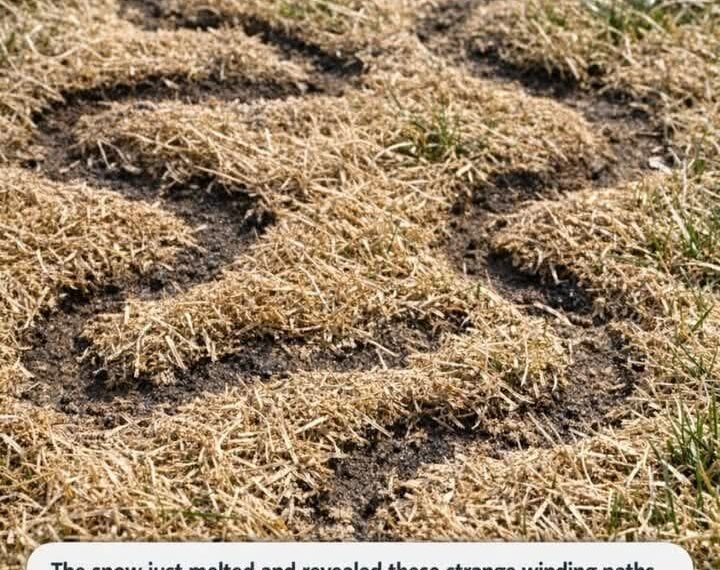
- Surface tunnels (like in the image)
- Small burrow openings (about 2–5 cm wide)
- Gnawed plant stems near ground level
- Soft, spongy areas in the lawn
If you see several of these, it’s very likely a vole infestation.
How to Get Rid of Voles
🌿 1. Remove Their Shelter
Voles love cover. Reduce it by:
- Cutting grass short
- Removing leaves and debris
- Clearing dense vegetation
🐱 2. Encourage Natural Predators
Animals like:
- Cats
- Owls
- Foxes
help control vole populations naturally.
🚧 3. Protect Your Plants
- Use wire mesh around tree bases
- Install barriers for garden beds
⚠️ 4. Use Traps if Needed
If the infestation is serious, traps can help reduce their numbers effectively.
Will Your Lawn Recover?
Yes—most lawns bounce back with a little care:
- Rake the damaged areas
- Reseed bare patches
- Water and fertilize lightly
Within a few weeks, your grass should start looking normal again.
Final Thought
Those strange, snake-like patterns in your yard might look alarming at first…
but they’re actually a hidden story of winter life beneath the snow.
While you were inside staying warm,
a tiny underground world was busy moving, feeding, and shaping your lawn.
Now that the snow is gone, the mystery is revealed—
and you know exactly who the culprit is.