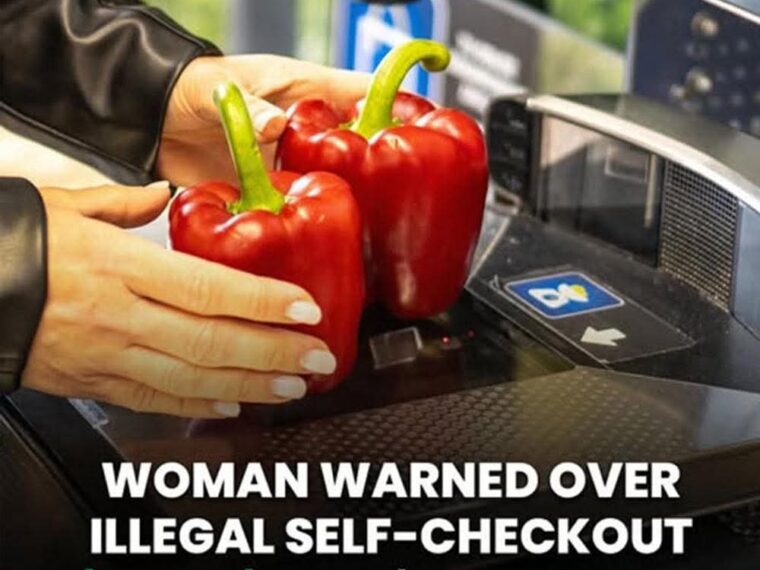
If given the chance, would you take something that doesn’t belong to you? And would that choice feel different if the “victim” weren’t a person, but a machine? Over the past ten years, retailers throughout the United States have installed tens of thousands of self-checkout kiosks to cut labor expenses. While these automated systems reduce staffing costs, they also introduce new and sometimes expensive problems. One of the most serious issues is theft. By exploiting system loopholes—such as the well-known “banana trick”—shoppers are costing stores significant losses.
The Banana Trick

Voucher Codes Pro, a coupon website, surveyed 2,634 consumers. Nearly one in five admitted they had stolen from a self-checkout machine at least once. More than half said they did so because they believed the risk of being caught was very low. Shoppers commonly rely on several methods to fool the system:
1. The Banana Trick
Scanning a costly product as if it were a cheap piece of produce. For instance, entering a banana code to pay for an expensive T-bone steak.
2. The Pass Around
Placing an item directly into a bag without scanning it.
3. The Switcheroo
Removing the barcode sticker from a low-cost item and attaching it to a more expensive one.
The Financial Impact
How much damage does this cause? In 2015, criminologists from the University of Leicester analyzed one million self-checkout purchases over a year. Total sales reached $21 million, yet nearly $850,000 worth of merchandise was never paid for.
Why Do People Steal?
Leicester researchers point to convenience as a major factor. Individuals who normally wouldn’t steal are now more tempted simply because the opportunity exists. As the researchers explained, “People who traditionally don’t intend to steal [might realize that] … when I buy 20, I can get five for free,” [2]. Many shoppers don’t plan to steal when they enter a store, but once they reach self-checkout and recognize how easy it is, they act on the impulse.
Additionally, penalties for retail theft have become less severe. In Dallas, Texas, police stopped routinely responding to thefts under $50, later increasing that threshold to $100 in 2015.
Morals Matter
Moral reasoning also plays a role. Barbara Staib, director of communications at the National Association for Shoplifting Prevention, argues that self-checkouts help people justify dishonest behavior. According to her, “[The machines give] the false impression of anonymity,” and “This apparently empowers people to shoplift.” [2]. For many, stealing from a machine doesn’t feel like committing a real crime.
University of Manchester criminologist Shadd Maruna explained this mindset further:
“Individuals can neutralize guilt they might otherwise feel when stealing by telling themselves that there are no victims of the crime, no human being is actually being hurt by this, only some mega-corporation that can surely afford the loss of a few quid. In fact, the corporation has saved so much money by laying off all its cashiers that it is almost morally necessary to steal from them.” [3]
Psychologist Frank Farley from Temple University adds that personality traits also matter. He describes many shoplifters as having “type-T” (or “thrill-seeking”) personalities. For these individuals, theft makes shopping more exciting. As he explains, “These can be risk-taking, stimulation-seeking people,” [2].
Why Retailers Still Use Self-Checkout
TO CONTINUE READING THE ARTICLE PLEASE SEE PAGE 2