Many gardeners dream of replacing part of their lawn with a vibrant wildflower meadow filled with color, pollinators, and natural beauty.
Traditional lawn care often requires constant mowing, watering, and fertilizing, while a wildflower meadow can provide ecological benefits and require far less maintenance once established.
However, one of the biggest barriers to creating a meadow is removing existing grass. Digging up turf is labor-intensive, time consuming, and often discourages gardeners from starting the project.
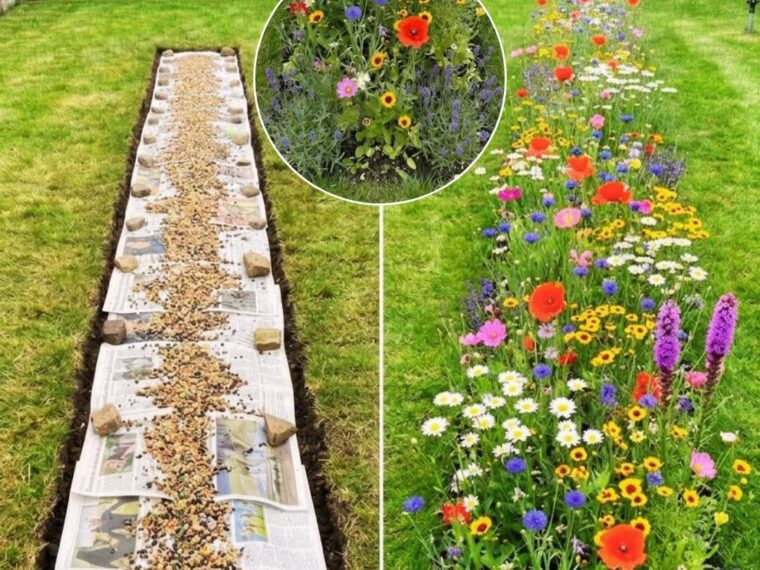
Fortunately, there is a much easier method. The no-dig meadow technique allows you to transform a lawn into a flourishing wildflower habitat without turning over the soil.
Wildflowers such as Papaver rhoeas, Leucanthemum vulgare, and Centaurea cyanus thrive in meadow environments and attract pollinators such as bees and butterflies.
Why Replace a Lawn With a Wildflower Meadow?
Lawns are common in many landscapes, but they often provide little ecological value. Traditional lawns consist of a few types of grass that require regular mowing and irrigation.
Wildflower meadows, on the other hand, support biodiversity and provide important habitat for pollinators.
Benefits of creating a wildflower meadow include:
• attracting bees, butterflies, and beneficial insects
• reducing water usage
• eliminating frequent mowing
• improving soil health
• creating seasonal color and natural beauty
Because many wildflowers are adapted to local climates, they often thrive with minimal care once established.
The Problem With Digging Up Lawns
Converting grass into a flower meadow traditionally involves removing turf using shovels or mechanical tools.
This process can be exhausting because grass roots are dense and tightly woven.
Digging also disturbs soil structure and can bring buried weed seeds to the surface.
Another disadvantage of digging is that it disrupts soil organisms such as earthworms and beneficial microbes.
For gardeners who want a simpler solution, the no-dig method offers a more sustainable approach.
What Is the No-Dig Meadow Method?
The no-dig method works by smothering existing grass instead of removing it.
Rather than turning over the soil, gardeners cover the lawn with layers of organic material that block sunlight from reaching the grass.
Without sunlight, the grass gradually dies and decomposes.
Over time, the decomposing grass becomes organic matter that enriches the soil.
Once the lawn has broken down, wildflower seeds can be planted directly into the prepared area.
This technique requires patience but dramatically reduces physical labor.
Why the No-Dig Method Improves Soil Health
Healthy soil is full of microorganisms, fungi, and earthworms that support plant growth.
Digging disturbs this delicate ecosystem by exposing deeper layers of soil to sunlight and air.
The no-dig approach keeps the soil structure intact.
As organic layers break down on the surface, earthworms pull the material into the soil and convert it into nutrients.
This natural process creates fertile soil without disturbing underground life.
Because the soil remains undisturbed, moisture retention also improves, making it easier for wildflowers to establish.
When to Start a Wildflower Meadow
The best time to start the no-dig process is either early spring or autumn.
Spring preparation allows seeds to germinate as temperatures rise.
Autumn preparation gives organic layers time to break down over winter so that seeds can be planted in spring.
If you begin the process several weeks before planting seeds, the lawn has enough time to weaken and decompose.
Starting early also helps prevent aggressive grasses from regrowing.
Step-by-Step Guide to the No-Dig Lawn Conversion
Turning a lawn into a meadow using the no-dig technique is surprisingly simple.
Follow these steps to create the ideal conditions for wildflowers.
TO CONTINUE READING THE ARTICLE PLEASE SEE PAGE 2