The Science of Cooled Rice: Resistant Starch, Retrogradation & Gut Health
You may have heard that cooling rice after cooking changes its starch structure — and that reheating it later doesn’t undo those changes. This process is called retrogradation, and it plays an important role in how your body digests starch.
But does it really mean you’re eating “half the calories”? Let’s break down what actually happens.
🔬 What Happens When You Cook Rice?
Rice is mostly made of starch, which consists of two main components:
- Amylose
- Amylopectin
When rice is cooked in water, heat causes the starch granules to swell and gelatinize. This makes them easier for digestive enzymes in your small intestine to break down into glucose (sugar).
That’s why freshly cooked hot rice is quickly digested and can raise blood sugar relatively fast.
❄️ What Is Retrogradation?
When cooked rice is cooled (especially in the refrigerator for several hours), part of the gelatinized starch begins to reorganize into a tighter crystalline structure. This process is known as retrogradation.
During retrogradation:
- Some digestible starch transforms into resistant starch.
- Resistant starch is not fully broken down in the small intestine.
- It passes into the large intestine largely intact.
This structural change is real and well-documented in food science.
🌿 What Is Resistant Starch?
Resistant starch behaves more like fiber than regular starch.
Instead of being absorbed as glucose in the small intestine, it travels to the large intestine where it:
- Feeds beneficial gut bacteria
- Produces short-chain fatty acids (like butyrate)
- Supports colon health
Because of this, resistant starch is often described as a prebiotic.
🔥 What Happens If You Reheat the Rice?
Interestingly, once the starch structure has retrograded, reheating does not completely reverse the process — especially if reheating is moderate and not extreme.
This means:
✔ Some resistant starch remains intact
✔ The gut benefits can still be present
✔ The glycemic impact may be slightly lower compared to freshly cooked rice
However, the amount varies depending on:
- Type of rice
- Cooling time
- Storage temperature
- Reheating method
⚖️ Does This Cut Calories in Half?
Here’s where we need clarity.
While resistant starch contains fewer digestible calories than regular starch, it does not reduce total calories by 50%.
Research suggests:
- Cooling rice can modestly reduce the amount of digestible starch.
- The calorie reduction is generally small — not dramatic.
- You are not literally eating “half the calories.”
The benefit is more about metabolic and gut health impact, not extreme calorie reduction.
🦠 Gut Health Benefits
Resistant starch fermentation in the large intestine produces short-chain fatty acids such as:
- Butyrate (supports colon cells)
- Acetate
- Propionate
These compounds may help:
- Support gut barrier function
- Promote healthy microbiome diversity
- Improve insulin sensitivity over time
- Reduce inflammation in the colon
🍽 How to Maximize Resistant Starch in Rice
If you want to increase resistant starch naturally:
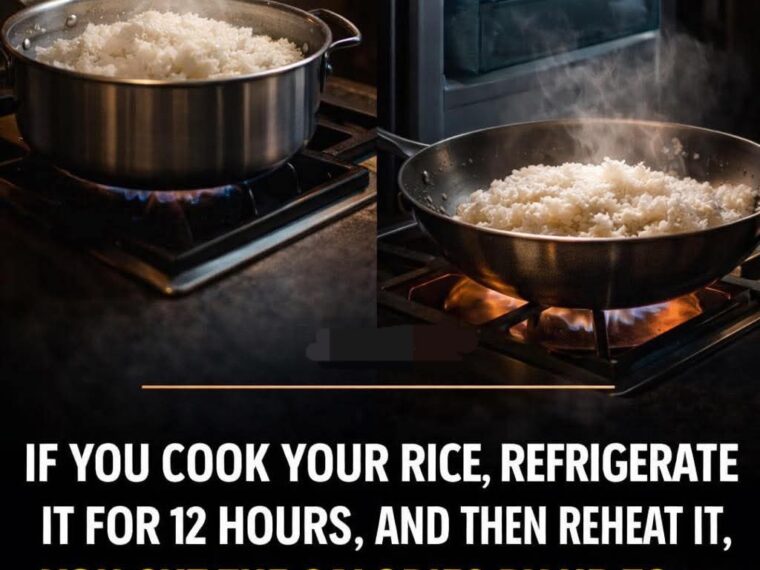
- Cook rice normally.
- Let it cool completely.
- Refrigerate for at least 12 hours.
- Reheat gently before eating.
This method works for:
- White rice
- Brown rice
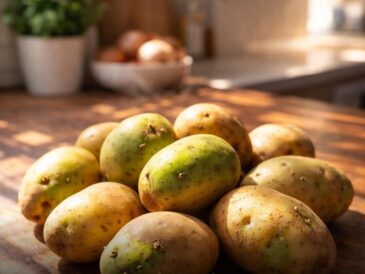
- Potatoes
- Pasta
🛑 Important Food Safety Note
Never leave rice at room temperature for long periods.
Cooked rice should be:
- Cooled quickly
- Stored in the refrigerator
- Reheated thoroughly
Improper storage can lead to bacterial growth.
🧠 The Bottom Line
✔ Cooling rice changes part of its starch into resistant starch.
✔ Resistant starch acts as a prebiotic and supports gut bacteria.
✔ Reheating does not fully undo this structural change.
✔ The calorie reduction is modest — not “half.”
✔ The biggest benefit is improved metabolic and digestive impact.
Instead of thinking of it as a “diet hack,” it’s better viewed as a small nutritional upgrade that supports gut health when included in a balanced diet.