
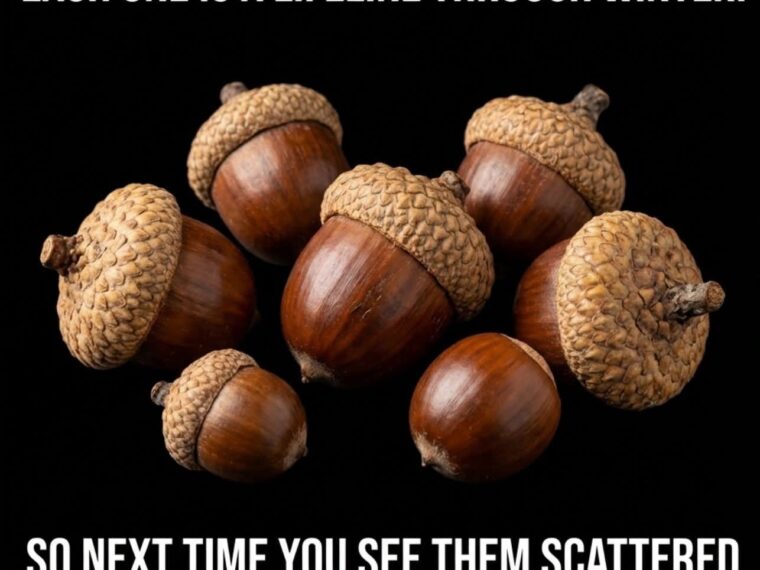
Those Acorns on Your Lawn Aren’t Mess — They’re Life 🌰🌳
Why Leaving Acorns Helps Wildlife Survive Winter
Every autumn, oak trees release thousands of acorns that scatter across yards, forests, and fields. To many homeowners, they look like clutter—something to rake up and discard. But to wildlife, each acorn is a lifeline.
Beneath the oak tree lies one of nature’s most important food systems, quietly supporting ecosystems through the harshest months of the year.
🌳 The Oak Tree’s Ancient Role
Oak trees have been feeding wildlife for millions of years. Long before lawns and leaf blowers, oaks evolved a system of abundance—producing massive quantities of acorns to sustain entire food webs.
This seasonal harvest is not waste.
It is a promise.
🐿️ One Acorn, Over 100 Species
A single oak tree can support over 100 species of wildlife, including:
- Squirrels
- Blue jays and other birds
- Deer
- Wild turkeys
- Mice and voles
- Raccoons
- Bears (in some regions)
- Insects that feed other animals
For many of these species, acorns are their primary winter food source.
❄️ Why Acorns Matter in Winter
Acorns are rich in:
- Healthy fats
- Protein
- Carbohydrates
This combination provides:
- Energy for cold temperatures
- Fat storage for winter survival
- Strength for migration and breeding
Animals often cache acorns—burying them in soil to retrieve months later. These stored calories can mean the difference between survival and starvation.
🐦 Birds Depend on Acorns Too
Blue jays play a special role. They collect and bury thousands of acorns each year, often forgetting some of them.
Those forgotten acorns:
- Feed soil organisms
- Grow into new oak trees
- Restore forests naturally
In this way, birds don’t just eat acorns—they plant the future forest.
🌱 Acorns Build Healthy Ecosystems
Leaving acorns where they fall helps:
- Support biodiversity
- Improve soil health
- Encourage natural regeneration
- Reduce erosion
- Strengthen local food chains
Removing them breaks a cycle that took centuries to perfect.
🧹 Why Raking Acorns Does Harm
When acorns are removed:
- Wildlife loses food
- Animals are forced closer to roads and homes
- Predators lose prey
- Forest regeneration slows
What looks tidy to us can be devastating to nature.
🏡 A Different Way to See Your Yard
Your yard isn’t just a lawn.
It’s part of a living ecosystem.
Those acorns aren’t clutter.
They are currency in the forest economy.
By leaving them:
- You support local wildlife
- You reduce the need for human intervention
- You allow nature to function as intended
🌰 What You Can Do Instead
- Leave acorns under oak trees
- Rake only walkways if needed
- Avoid using leaf blowers in fall
- Let leaves and acorns decompose naturally
- Observe wildlife activity instead of disrupting it
Small changes make a big difference.
🌟 Final Thoughts
When you see acorns scattered across your yard, remember:
That’s not mess.
That’s the oak fulfilling its ancient contract with the forest.
Leave them.
The squirrels will feast.
The birds will plant tomorrow’s trees.
The deer will survive the cold.
And the forest will quietly continue its work.