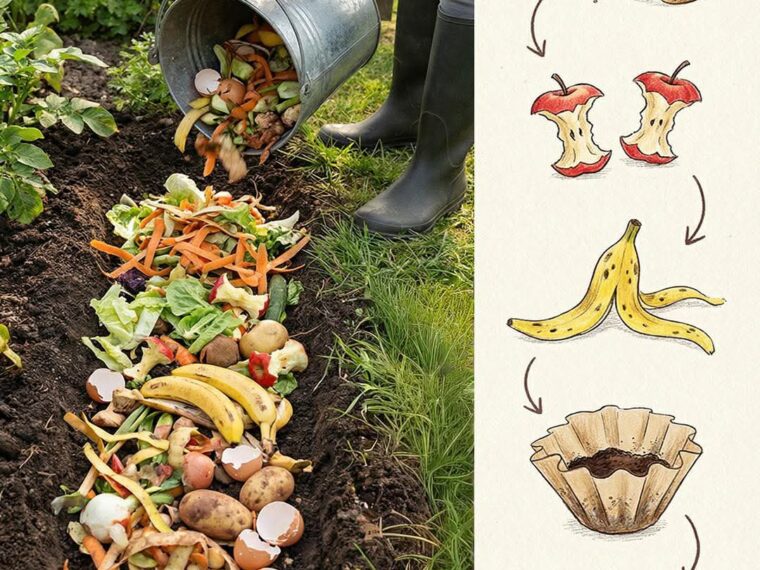
Trench composting is one of the easiest ways to turn kitchen scraps into rich soil—without a compost bin, turning piles, or extra hassle. You simply bury food scraps directly in the garden, let nature break them down, and your soil gets better over time.
✅ What trench composting is
It’s a simple method where you dig a trench (or hole), add compostable scraps, and cover them with soil. The buried scraps decompose underground and feed the soil right where your plants need it.
✅ What you can use
These are great for trench composting:
- Fruit & vegetable scraps (peels, cores, ends)
- Banana peels
- Apple cores
- Coffee grounds + paper filters
- Tea leaves (only if the tea bag is plastic-free)
- Crushed eggshells
- Bread, rice, and pasta (small amounts only)
- Plain paper napkins/paper towels (unbleached preferred)
- Shredded cardboard or paper egg cartons (non-glossy)
- Dead flowers
- Grass clippings (thin layers)
- Dry leaves
- Garden trimmings (disease-free)
❌ What to avoid
These can attract pests, smell bad, or cause problems:
- Meat, fish, bones
- Dairy products
- Oils, grease, butter
- Cooked foods with lots of sauce or seasoning
- Pet waste (dog/cat)
- Diseased plants
- Weeds with seeds or invasive roots
- Glossy paper / coated cardboard
- “Compostable” packaging (many need industrial composting)
🛠️ How to do it (the easy way)
- Dig a trench or hole about 8–12 inches deep.
- Add a layer of scraps (chop them smaller to speed things up).
- Mix in a little dry material (leaves, shredded cardboard) if you have it.
- Cover completely with soil.
- Mark the spot so you remember where it is.
- Rotate to a new spot next time.
⚠️ Common mistakes (and how to avoid them)
- Burying too shallow → attracts animals and smells
(Go deeper: 8–12 inches.) - Adding too much in one spot → slows decomposition
(Spread scraps out and rotate trenches.) - Big chunks of food → takes longer to break down
(Chop scraps before burying.) - Not covering well enough → pests find it fast
(Cover with soil fully—no scraps showing.) - Planting immediately on fresh scraps → plants can struggle at first
(Wait a few weeks, or plant nearby first.) - Adding problem materials (meat, dairy, oily food) → odor + pests
(Stick to plant-based scraps and paper.)
🌱 Why people love trench composting
- No bin needed
- No turning or maintenance
- Less kitchen waste
- Feeds the soil naturally
- Great for small gardens and raised beds
It’s simple, low-effort, and a great way to make your garden healthier with things you’d normally throw away. 🌿♻️