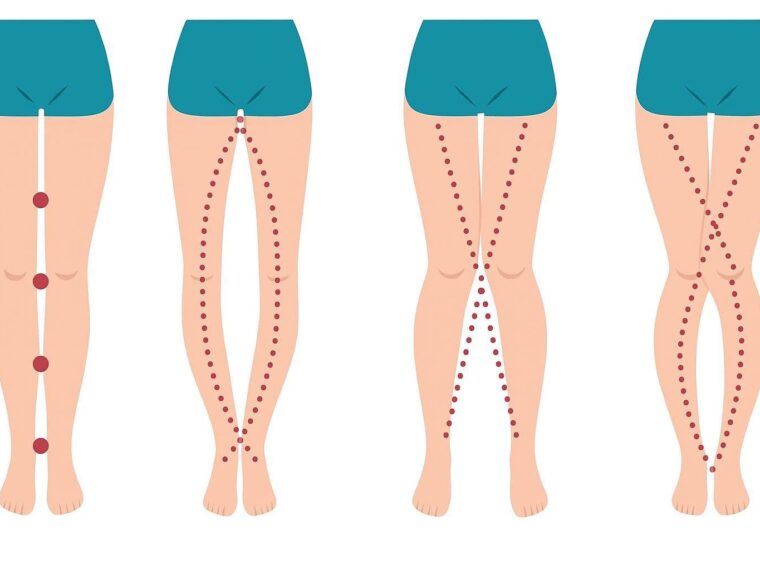
Types of Leg Alignment (Knee Alignment)
The alignment of the legs and knees plays a major role in how the body distributes weight during standing and walking. Orthopedic specialists usually describe several common patterns of leg alignment. These patterns can affect posture, joint health, and sometimes lead to pain if the imbalance becomes severe.
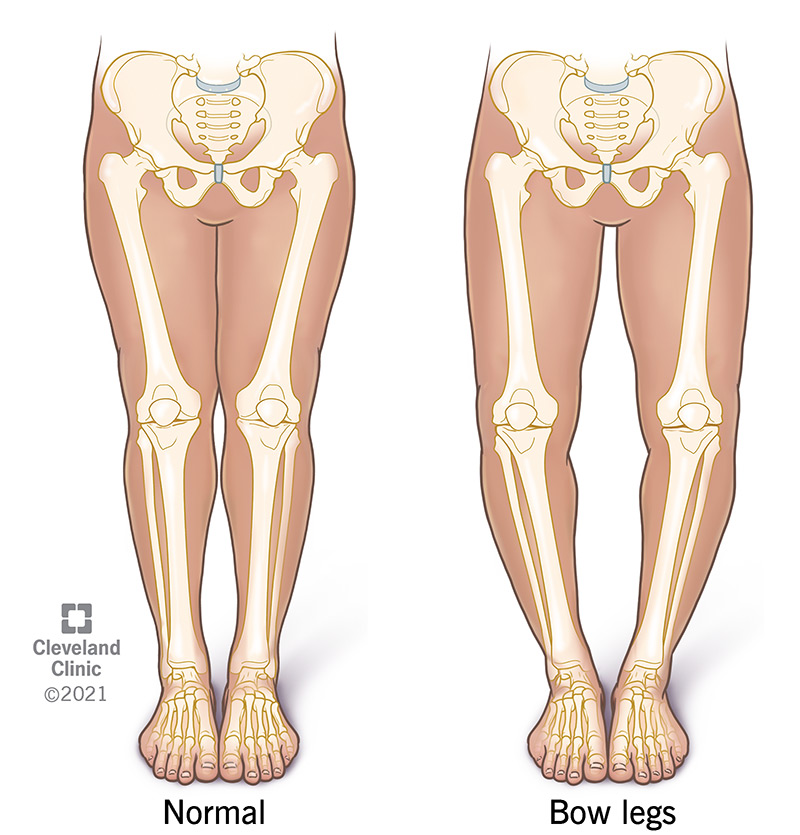
1. Normal Leg Alignment
In a normal alignment, the hip, knee, and ankle form a nearly straight line.
Key characteristics:
- The knees face forward and align with the hips and ankles.
- Body weight is evenly distributed through the legs.
- This alignment minimizes stress on the knee joints and surrounding muscles.
When the alignment is correct, walking and running movements are more efficient and the risk of joint wear is lower.
2. Bow Legs (Genu Varum)
Bow legs occur when the knees stay apart even when the ankles are touching.
Main signs:
- Legs curve outward like a bow.
- The knees remain separated when standing with feet together.
- Increased pressure is placed on the outer side of the knee joint.
Possible causes:
- Natural development during early childhood
- Bone growth disorders
- Arthritis or joint degeneration in adults
- Nutritional deficiencies such as vitamin D deficiency
Mild cases may not require treatment, but severe bowing can lead to knee pain or arthritis over time.
3. Knock Knees (Genu Valgum)
Knock knees occur when the knees touch while the ankles remain separated.
Characteristics:
- The knees angle inward.
- Ankles stay apart even when knees touch.
- More stress is placed on the inner side of the knee joint.
Common causes:
- Normal development in children between ages 2–6
- Genetic factors
- Obesity
- Bone or joint disorders
In many children this condition corrects itself with growth, but persistent cases may need medical evaluation.
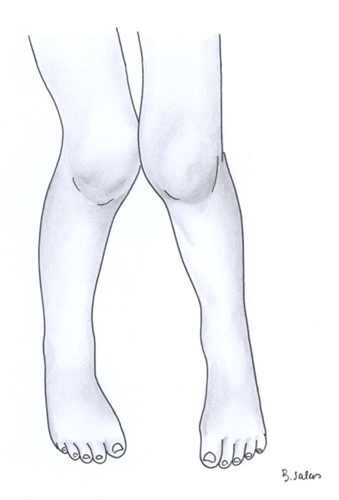
4. Crossed or Rotational Leg Alignment
In some individuals, the legs appear to cross or rotate inward or outward during standing or walking.
Features:
- Knees may rotate or cross slightly when walking.
- Feet may point inward or outward.
- Can be related to hip rotation, muscle imbalance, or skeletal alignment.
This type of alignment can sometimes lead to uneven muscle use and fatigue if not corrected.
Why Proper Alignment Matters
Correct leg alignment is important because it:
- Maintains balanced body weight distribution
- Reduces stress on knee cartilage
- Helps prevent early joint degeneration
- Improves walking and athletic performance
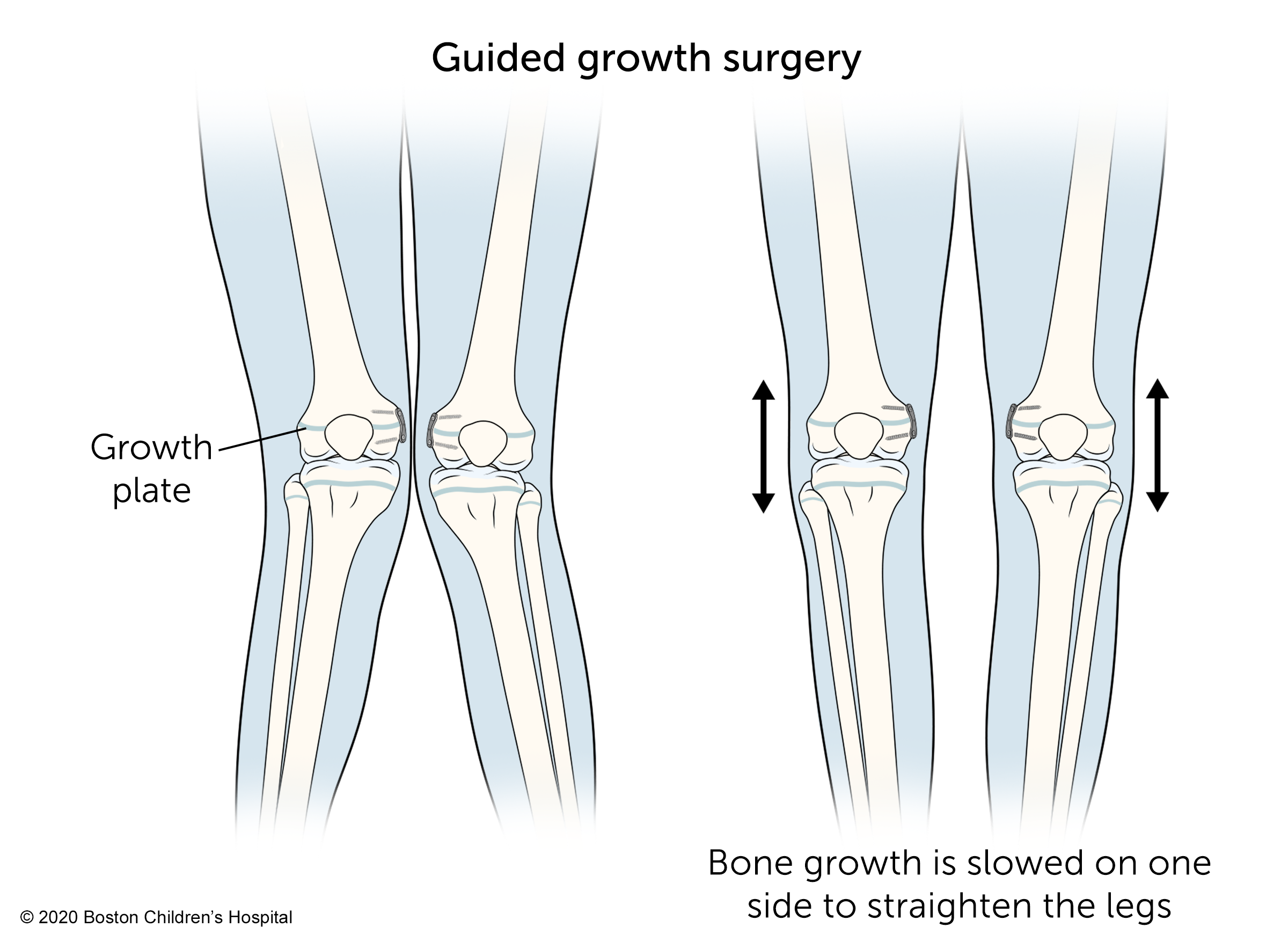
When alignment problems are significant, treatment options may include physiotherapy, strengthening exercises, orthotic supports, or in rare cases corrective surgery.
✅ Summary:
Leg alignment varies from person to person, but the most recognized patterns are normal alignment, bow legs, knock knees, and crossed or rotational alignment. Early evaluation can help prevent future joint problems and improve movement efficiency.