
⚠️ This is for informational purposes only. For medical advice or diagnosis, consult a professional.
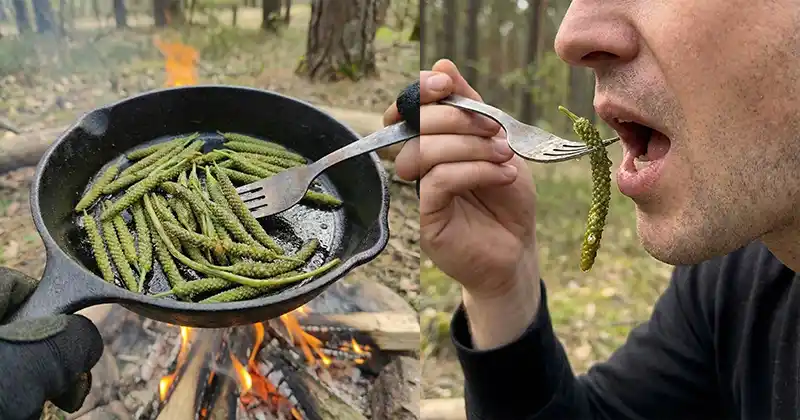
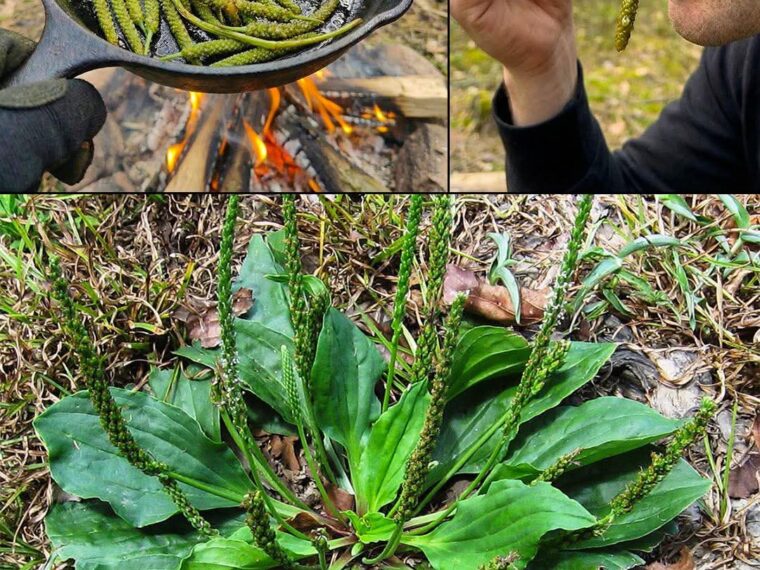
Broadleaf plantain is one of those common “yard plants” that many people recognize as a skin-soother, but fewer people think of as food. The flowering shoots (the young, tender stalks that rise from the center of the plant) are a particularly practical edible part: they’re easy to harvest in quantity, they cook quickly, and they contain many of the same plant compounds that made plantain a staple in traditional home use.
This article stays tightly focused on Plantago major flowering shoots—what they are, what they may do for health, and the most useful ways to prepare and use them.
What you’re actually harvesting
A broadleaf plantain plant forms a flat rosette of oval leaves close to the ground. From the center, it sends up leafless stalks topped with a dense green-brown “spike” of tiny flowers that later becomes seeds.
For eating, the best target is:
- Young flowering shoots that are still tender and flexible
- Ideally before the seed spike becomes hard and dry
- Shoots that snap or pop off easily from the base
As the stalks age, they become fibrous and tougher, and the flavor can turn more bitter/astringent.
Why the flowering shoots can be a smart edible choice
1) Nutrients you can reasonably expect
Plantain is not a “miracle food,” but it is a real green plant with a typical wild-edible profile:
- Fiber (especially in older leaves and older shoots)
- Micronutrients commonly found in leafy plants (vitamins and minerals vary with soil and season)
- Antioxidant compounds (polyphenols and related plant chemicals)
The shoots are generally milder than mature leaves, and because they’re eaten as a vegetable-style side, they can be an easy way to add variety and plant compounds to a meal.
2) Plant compounds that explain its traditional “medicinal” reputation
Broadleaf plantain contains several classes of compounds that are widely discussed in herbal medicine traditions and investigated in lab research:
- Mucilage (a soothing, gel-like soluble fiber)
- Tannins (astringent compounds)
- Iridoid glycosides (often highlighted for anti-inflammatory activity)
- Flavonoids and phenylethanoid glycosides (antioxidant/anti-inflammatory potential)
These don’t “guarantee” a medical effect when you eat a serving, but they help explain why plantain has long been used for soothing irritated tissue and supporting skin recovery.
Potential health benefits (kept realistic)
A) Soothing and calming irritated tissues
Because of its mucilage, plantain has a longstanding reputation as a “soothing” plant. In practical terms, mucilage can form a gentle coating and may feel calming to mild throat or digestive irritation for some people.
What matters for the shoots: cooking makes them easier to eat, but mucilage is still present in the plant. People who enjoy plantain as food often value it as a “gentle” green.
B) Anti-inflammatory and antioxidant support (general, not a disease claim)
The polyphenols and iridoid-related compounds in plantain are studied for anti-inflammatory and antioxidant actions in controlled settings. In everyday life, the most responsible way to frame this is:
- Eating a variety of plants provides a range of protective compounds.
- Plantain shoots can be one of those plants.
This is best thought of as supportive nutrition, not a treatment.
C) Astringent qualities that can be useful topically
Tannins contribute to the traditional use of plantain on skin—often described as helping with weeping, irritated, or “angry” looking spots by feeling “tightening” or drying.
This doesn’t replace proper wound care or medical evaluation, but it’s one reason many foragers keep plantain in their mental toolkit.
The most useful ways to eat the flowering shoots
1) Quick pan-sauté (the most practical method)
Why it works: fast cooking softens fibers, reduces bitterness, and concentrates flavor.
Basic approach
- Rinse shoots well, pat dry
- Chop into bite-size lengths
- Cook in a hot pan with a small amount of cooking fat
- Season simply (salt/pepper; garlic if you like)
- Cook just until tender-crisp (a few minutes)
Tip: If shoots are slightly older, blanch 30–60 seconds, drain, then sauté. That reduces toughness and any harshness.
2) Blanch and freeze (for seasonal batch harvesting)
If you find a large patch:
- Blanch briefly, cool, drain well
- Freeze in thin layers or small portions
Later, toss frozen portions directly into a pan or soup.
3) Add to eggs, grains, or soups
Because the shoots behave like a mild vegetable:
- Stir into eggs near the end of cooking
- Fold into grains or legumes after sautéing
- Add to soups late so they don’t over-soften
4) Pickle very young shoots (optional)
Very young, tender shoots can be pickled for a bright, tangy condiment. The key is to use only the most tender shoots, because pickling won’t magically fix fibrous texture.
Non-food uses (simple, traditional, and practical)
If you want “power” from plantain beyond nutrition, these are the most grounded, commonly used approaches:
1) Simple fresh leaf poultice (for minor skin irritation)
- Clean the area with water first
- Crush or chew a clean leaf to release juices (or mash with a little clean water)
- Apply to the spot and cover lightly
- Replace periodically
Use case: minor bites/itchy irritation, mild rubbing irritation, or tiny scrapes.
Avoid: deep wounds, punctures, serious burns, signs of infection, or anything worsening quickly.
2) Infusion (tea) from leaves (gentle, traditional)
A leaf infusion is commonly used in folk practice for mild throat comfort or general “soothing” use. If you do this:
- Use clean, correctly identified leaves
- Keep it mild
- Stop if it upsets your stomach or you notice any reaction
(You can also simply eat the plant and skip the “remedy” angle if you prefer.)
Harvesting and safety: what you really need to know
Correct identification matters
Broadleaf plantain is usually recognized by:
- Oval leaves in a ground-hugging rosette
- Strong parallel veins that run from the base toward the tip
- Leafless flowering stalks rising from the center
If you’re not fully confident, don’t eat it.
Harvest clean plants only
Plantain often grows where contamination is common:
- Roadsides (heavy metals, exhaust residue)
- Lawns treated with herbicides/pesticides
- Pet-heavy areas
Pick from clean soil you trust.
Start small
Even edible wild plants can cause reactions:
- Try a small portion first
- Watch for digestive upset or allergy-like symptoms
Special caution situations
If any of these apply, be conservative and consider professional advice:
- Pregnancy or breastfeeding
- Taking blood thinners (because leafy plants can vary in vitamin K)
- Known plant allergies or sensitive digestion
- You’re using plantain topically on broken skin and it worsens
And for anything significant—serious rash, infection, breathing trouble, severe swelling—use appropriate medical care rather than home experiments.
The bottom line
Eating young Plantago major flowering shoots is a practical, nutrient-forward way to use a common plant—especially when harvested tender and cooked quickly. The “health power” is best understood in two lanes:
- Food lane: fiber + plant compounds + variety in your diet
- Simple traditional-use lane: mild soothing and astringent qualities, especially topically for minor irritation
Inspired by this? Share the article with your friends!