The Self-Sufficient Backyard: A Complete Guide for the Independent Homesteader
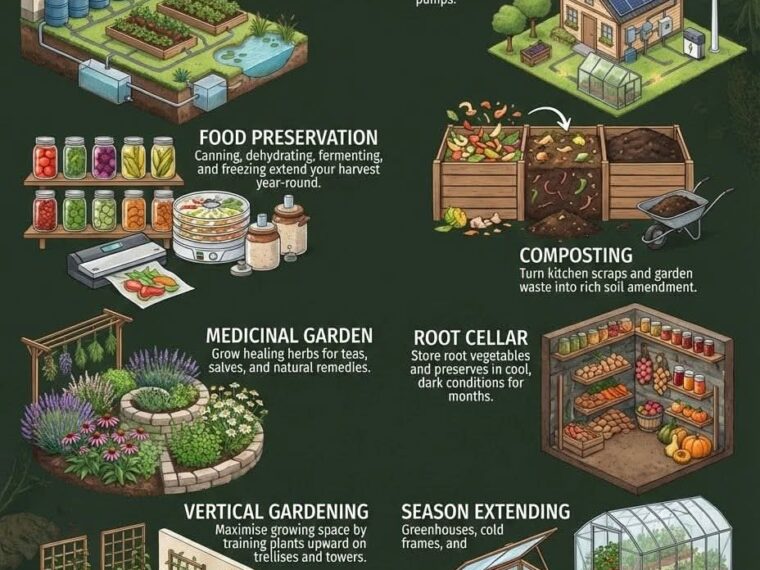
The infographic shown serves as both a visual guide and a table of contents for the book The Self-Sufficient Backyard: For the Independent Homesteader. More than just an illustration, it represents a clear and achievable roadmap for transforming an ordinary property into a thriving, sustainable ecosystem.
This guide is designed for anyone who wants to reduce dependence on external systems and embrace a more resilient, hands-on way of living—whether in a rural homestead, suburban yard, or small urban space.
🌱 A Vision of Backyard Self-Sufficiency
At its core, The Self-Sufficient Backyard promotes the idea that true sustainability begins at home. The book breaks down self-reliance into practical, manageable projects that work together as one integrated system.
Rather than focusing on a single skill, it shows how food, water, energy, waste, and shelter can support one another in a closed-loop environment.
🏡 What the Infographic Represents
The infographic functions as a big-picture overview of the self-sufficient homestead. Each section highlights a key area of independence, allowing readers to understand how different systems connect.
It acts as:
- A learning roadmap
- A planning checklist
- A visual reminder that sustainability is built step by step
🌿 Food Production: Growing and Raising Your Own
One of the main pillars of the book is home food security. Topics include:
- Vegetable gardens and raised beds
- Fruit trees and perennial crops
- Composting and soil regeneration
- Small livestock and backyard poultry
- Seed saving and seasonal planting
The emphasis is on producing nutrient-dense food while improving soil health year after year.
💧 Water Independence and Conservation
Water is treated as a precious resource. The book explores:
- Rainwater harvesting systems
- Greywater reuse
- Efficient irrigation methods
- Natural water filtration
- Drought-resilient landscaping
These strategies help reduce water bills while protecting the environment.
🔥 Energy and Off-Grid Solutions
The infographic highlights practical ways to lower reliance on external energy sources, such as:
- Solar panels and solar heating
- Wood heat and fuel efficiency
- Energy-saving home design
- DIY power backups
Even partial energy independence can significantly increase household resilience.
♻️ Waste Reduction and Resource Cycling
Nothing is wasted in a self-sufficient backyard. The book teaches how to:
- Turn kitchen scraps into compost
- Reuse materials creatively
- Build systems that recycle nutrients
- Reduce landfill waste
Every output becomes an input for another part of the system.
🛠️ DIY Projects and Practical Skills
A major strength of The Self-Sufficient Backyard is its hands-on approach. The infographic references numerous DIY projects, including:
- Garden beds and cold frames
- Chicken coops and shelters
- Root cellars and food storage
- Tool sheds and workspaces
These projects are designed to be achievable with basic tools and skills.
🌎 Creating a Living Ecosystem
Rather than isolated projects, the book emphasizes systems thinking. Gardens feed animals, animals enrich soil, soil grows food, and waste becomes fertilizer. The backyard becomes a living, balanced ecosystem.
This approach builds long-term sustainability instead of short-term solutions.
👨🌾 Who This Book Is For
The Self-Sufficient Backyard is ideal for:
- Beginner homesteaders
- Families seeking food security
- Gardeners wanting to expand their skills
- Anyone interested in sustainable living
- People preparing for uncertain times
No large acreage is required—only commitment and curiosity.
🌱 Final Thoughts
The infographic for The Self-Sufficient Backyard: For the Independent Homesteader captures a powerful idea: self-reliance is achievable, practical, and deeply rewarding. By combining food production, water management, energy efficiency, and DIY skills, anyone can transform their property into a productive, resilient space.
True independence doesn’t happen overnight—but with the right plan, it grows season by season.