If you love flowers but don’t want to replant your garden from scratch every spring, self-seeding flowers are one of the smartest choices you can make.
These plants complete their life cycle, drop seeds naturally, and grow again the following season – often with little to no help from the gardener.
Unlike strict perennials that regrow from the same roots, self-seeding flowers return from seed. That means they may appear in slightly different spots each year, creating a more natural, meadow-like look.
Once established, they can provide continuous color, pollinator support, and garden resilience with far less work.
What Are Self-Seeding Flowers?
Self-seeding flowers are annuals or short-lived perennials that produce viable seeds which fall to the soil and germinate the following season.
If conditions are right – soil contact, moisture, and light – new plants emerge without replanting.
They are sometimes called:
- Volunteer flowers
- Reseeding annuals
- Naturalizing annuals
Self-seeders are popular in cottage gardens, pollinator gardens, and low-maintenance landscapes.
Why Gardeners Love Self-Seeding Flowers
Once established, self-seeding flowers offer real advantages:
- Reduced replanting work
- Lower seed costs
- Continuous seasonal color
- Natural garden look
- Strong local adaptation over time
- Reliable pollinator support
- Soil seed bank development
They are especially useful for gardeners who prefer relaxed, nature-inspired planting styles.
1. Calendula (Pot Marigold)
Calendula is one of the most dependable self-seeding flowers. Its bright orange and yellow blooms produce abundant seeds that germinate easily.
Calendula thrives in cool seasons and often reseeds in both spring and fall. It tolerates light frost and poor soil and is widely used in herb and pollinator gardens.
Best zones: 3–10
Sun: Full sun to partial
Bonus: Edible petals
2. California Poppy
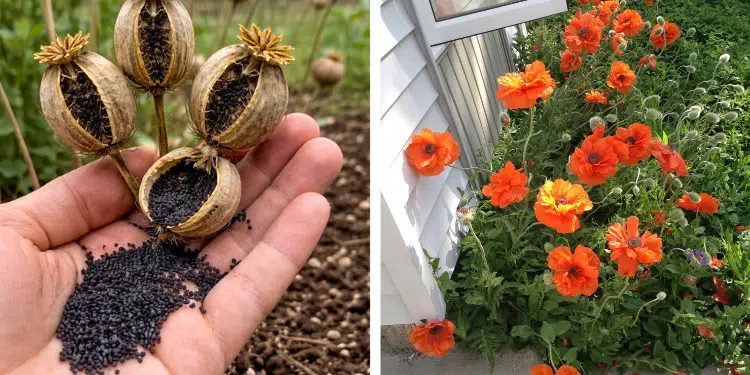
California poppies are classic self-seeders in dry and sunny gardens. Once planted, they often return for many years without intervention.
They prefer well-drained soil and actually reseed better in lean soil than rich beds. Too much fertilizer reduces reseeding success.
Best zones: 6–10 (reseeds widely elsewhere)
Sun: Full sun
Bonus: Excellent drought tolerance
3. Cosmos
Cosmos produce large numbers of seeds and frequently return where winters are not too severe. Even in colder zones, some seeds survive and sprout in spring.
They bloom for a long season and attract pollinators continuously.
Best zones: 4–10
Sun: Full sun
Bonus: Great for cutting gardens
4. Nigella (Love-in-a-Mist)
Nigella is famous for reliable reseeding. Its decorative seed pods drop seeds close to the parent plant, creating natural drifts year after year.
It prefers cool-season germination and often appears early in spring.
Best zones: 4–9
Sun: Full sun to light shade
Bonus: Ornamental seed pods for dried arrangements
5. Larkspur
Larkspur reseeds best when sown in fall or very early spring. Seeds require cold exposure to germinate well, making them ideal natural self-seeders.
They create tall, colorful spikes and return reliably in undisturbed soil.
Best zones: 3–9
Sun: Full sun
Bonus: Early pollinator support
6. Bachelor’s Buttons (Cornflower)
Bachelor’s buttons are tough, cold-hardy, and enthusiastic reseeders. Once established, they often reappear for years.
They perform well in poor soils and bloom early.
Best zones: 3–9
Sun: Full sun
Bonus: Edible blue petals
7. Sweet Alyssum
TO CONTINUE READING THE ARTICLE PLEASE SEE PAGE 2