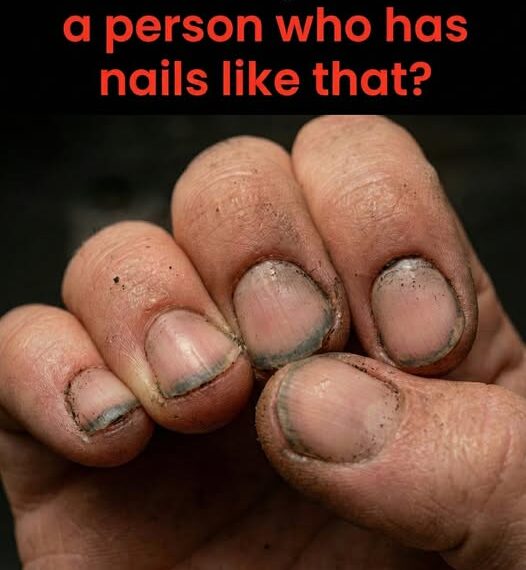
The image shows a hand with fingernails darkened by dirt, the edges filled with grime. The question that quickly comes to mind is simple — yet revealing:
“What do you call someone with nails like that?”
It seems like a straightforward question. But the response often reveals more about the person judging than the person being judged.
First Reaction: Hygiene
At first glance, dirty nails are commonly linked to poor hygiene. From childhood, we’re taught the importance of keeping our hands clean. Germs can hide beneath fingernails. Bacteria spreads easily through touch. Washing hands properly and trimming nails are basic habits that protect both personal and public health.
In some cases, consistently dirty nails may signal neglect — especially if someone has access to water, soap, and time but chooses not to care for themselves. Cleanliness matters. It supports health, confidence, and social respect.
But that’s only part of the picture.
The Other Side: Honest Labor
Now consider another possibility.
Those nails might belong to:
A mechanic who has just finished fixing an engine
A gardener who spent hours working the soil
A construction worker mixing cement
A farmer gathering crops
A painter, plumber, electrician, or welder
In many types of manual work, dirt is not a flaw — it’s simply the result of effort. Some tasks stain the skin. Certain materials cling beneath the nails no matter how much you scrub. Sometimes the dirt you see is simply proof that someone has been building, repairing, planting, or creating.
In those situations, dirty nails are not a sign of carelessness. They are a sign of work.
Context Changes Everything
The same detail — nails darkened with dirt — can mean completely different things depending on the situation.
At a formal dinner with no sign of labor? It might suggest poor hygiene.
At the end of a long shift on a construction site? It likely shows dedication.
During volunteer work cleaning after a flood? It reflects service.
On a parent who just repaired a broken fence? It shows responsibility.
Without context, judgment easily turns into assumption.
damaged damaged nail without manicure with dirt close-up. Nail Health Care.

For illustrative purposes only
The Deeper Question
So what do you call someone with nails like that?
There isn’t a single fair answer.
You might call them:
A worker
A builder
A provider
Someone who just finished a demanding day
Or yes, in some situations, someone who could improve their hygiene habits
But you cannot know which one it is without understanding their story.
And that’s the point.
What We Choose to See
Sometimes society is quick to associate visible “messiness” with lower status or laziness. Yet many of the cleanest hands in an office have never built anything tangible. And many of the dirtiest hands have fed families, built homes, repaired roads, and grown food.
Dirt can be washed away.
Character cannot.

For illustrative purposes only
Conclusion
Cleanliness matters. Good hygiene protects health and shows respect for yourself and others. Regular handwashing and nail care are important habits.
But respect for people matters even more.
Before judging someone based on what is under their fingernails, pause and ask:
Are you seeing neglect or are you seeing hard work?
Sometimes what appears dirty is simply proof of effort.
And sometimes, the cleanest choice you can make is to hold back your judgment.