
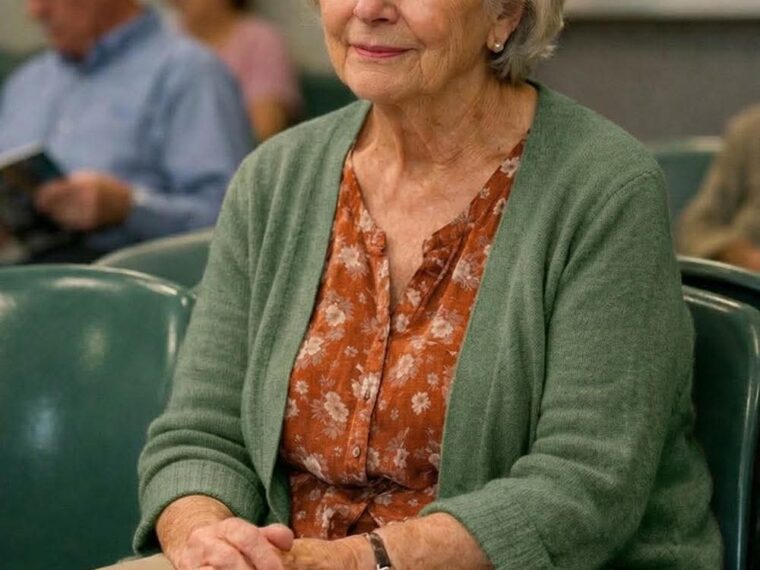
You sit on the rigid plastic bench at the bus stop, your purse gripped tightly in both hands, the late afternoon sun stretching long shadows across the pavement. And for the first time in six months, your grief no longer feels like a heavy weight pressing on your ribs. It feels sharp now. Alert. Alive. The kind of feeling that tells you something buried is starting to rise.
People move around you in the steady rhythm of an ordinary day. A mother wipes juice from her little boy’s lips. A delivery truck rattles past. Somewhere down the block, a dog barks behind an iron gate. The world looks painfully normal, and yet yours has been split open by a single phone call.
Your daughter sold your beach house.
She sold Roberto’s car.
And she did it with the certainty of someone who believed you were too broken, too old, and too alone to stop her.
That thought should have made you crumble.
Instead, it sends a strange calm through you, because beneath the shock, beneath the insult, beneath forty-five years of motherhood and sacrifice, one memory keeps burning brighter with every passing second.
The manila envelope.
You can picture it as clearly as if it were resting in your lap. Roberto standing by the dresser three nights before he died, his face more serious than usual, his hand lingering on the edge of the drawer as if he were placing something fragile into your future. His voice had been soft, almost careful. Antonia, keep this in the dresser. If anything happens to me, open it later. Only when you’re ready.
At the time, you had laughed and told him to stop talking like an old movie.
He had smiled, but not completely.
That should have warned you.
The bus arrives with a hiss of brakes, and you climb aboard slowly, feeling every one of your seventy-one years in your knees. The driver lowers the step without being asked. You thank him and take a seat near the middle, your purse resting on your lap while the city drifts past the window in faded colors and fractured reflections.
Your mind keeps returning to Ángela’s voice.
Not shaky. Not apologetic. Not even hurried.
Cold.
The kind of cold that doesn’t appear all at once. It forms slowly, like ice building inside hidden pipes, while everyone in the house keeps drinking from the tap and pretending the water tastes the same.
You think about all the afternoons she came by after Roberto died. The way she insisted on organizing your papers. The way she asked where the deed was kept, where the car title was, which bank Roberto preferred, whether you still remembered your passwords. At the time, it felt like help. A daughter stepping in to protect her widowed mother.
Now you can see the truth moving beneath those moments like a snake through tall grass.
She wasn’t helping.
She was mapping your life.
The bus jolts over a pothole, and your fingers tighten around your purse. You remember Eduardo’s face at Roberto’s funeral—how dry his eyes were, how impatient he seemed with grief, as though sorrow were just an inconvenience delaying other plans. He hugged you, but his arms stayed stiff. Later, while neighbors carried trays of food into your kitchen, you caught him studying the framed photo of your beach house with the same look men use when inspecting property they plan to buy cheap and flip fast.
You ignored it then.
Widowhood makes everything feel foggy.
By the time you reach your stop, the sun has dropped lower, bathing the street in dusty gold. Your house looks exactly the same from the outside: the small front garden Roberto trimmed every Saturday, the blue shutters that need repainting, the wind chime by the porch he once brought home from a roadside market because he said it sounded like laughter. You pause at the gate before opening it, and the stillness of the place wraps around you like a question.
Inside, the air carries a faint scent of lavender and old wood.
TO CONTINUE READING THE ARTICLE PLEASE SEE PAGE 2