🌿🍅
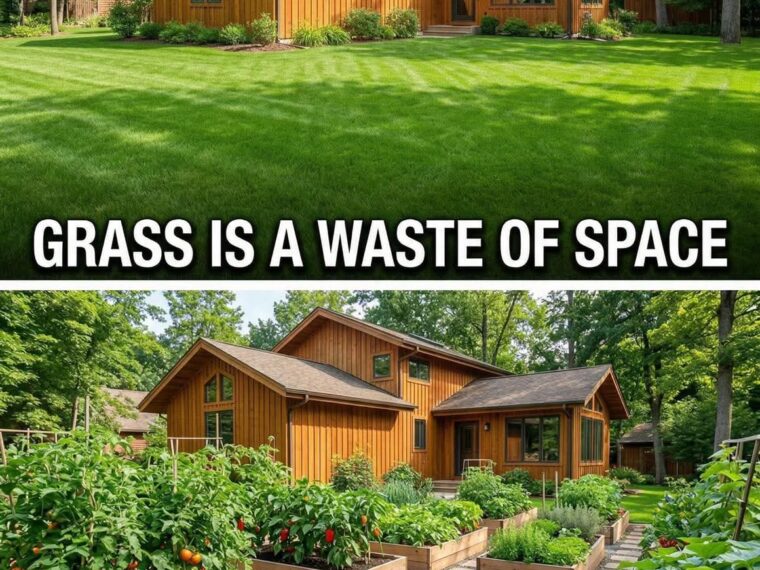
For decades, the perfect green lawn has been a symbol of a well-kept home. It’s neat, uniform, and visually pleasing—but beneath that beauty lies a simple truth: a lawn doesn’t feed you.
What if that same space could do more? What if instead of maintaining grass, you were harvesting fresh vegetables, herbs, and fruits right outside your door?
The idea of replacing a lawn with a food garden isn’t just a trend—it’s a shift toward a more practical, sustainable, and rewarding way of living.
🌱 The Hidden Cost of a “Perfect” Lawn
A traditional lawn may look harmless, but it often requires:
- Constant watering
- Frequent mowing
- Fertilizers and maintenance
- Time and energy with little return
And in the end?
You get… grass. Something that looks good but doesn’t contribute to your food, health, or self-sufficiency.
🍅 What You Gain by Growing Food Instead
Turning part (or all) of your lawn into a garden transforms it from decorative to productive.
🥬 1. Fresh, Nutritious Food
Imagine stepping outside to pick:
- Tomatoes 🍅
- Lettuce 🥬
- Herbs like mint, basil, or parsley 🌿
Homegrown food is fresher, often more flavorful, and free from unnecessary chemicals.
💰 2. Save Money Over Time
Groceries add up quickly—especially fresh produce. Growing your own food can:
- Reduce weekly shopping costs
- Provide a steady supply of essentials
- Lower dependence on store-bought items
🌍 3. More Sustainable Living
Replacing grass with edible plants helps:
- Reduce water waste (especially with smart planting)
- Support pollinators like bees 🐝
- Cut down on chemical use
It’s a small change that benefits both your home and the environment.
🧠 4. A More Meaningful Outdoor Space
A food garden gives your yard purpose. Instead of just maintaining it, you:
- Interact with it daily
- Learn new skills
- Experience the satisfaction of growing your own food
It becomes a space that gives back.
🔄 You Don’t Have to Remove Everything
Switching to a food garden doesn’t mean tearing out your entire lawn overnight.
Start small:
- Convert a corner into raised beds
- Replace grass along fences with herbs or vegetables
- Use containers if space is limited
Even a small section can produce surprising amounts of food.
🌿 Easy Crops for Beginners
If you’re new to gardening, start with plants that are simple and reliable:
- Leafy greens (lettuce, spinach)
- Tomatoes
- Zucchini
- Herbs (mint, coriander, basil)
These grow quickly and give you visible results, which keeps motivation high.
⏳ Less Maintenance, More Reward
While gardening does require care, it often replaces time spent mowing and maintaining grass with something far more rewarding.
Instead of:
- Cutting grass every week
You’ll be:
- Harvesting food
- Watering with purpose
- Watching something grow and thrive
⚖️ It’s Not About Perfection
A lawn is about control—uniform, trimmed, predictable.
A garden is about life—diverse, changing, and productive.
You may not get perfect rows or flawless results at first, but what you gain is far more valuable:
- Real food
- Real learning
- Real satisfaction
🌟 Final Thoughts
The question isn’t whether lawns are bad—it’s whether they’re the best use of your space.
A yard can be more than something you look at. It can be something that supports you, feeds you, and connects you to what you eat.
So instead of asking, “How can I make my lawn look better?”
Try asking, “What could this space do for me?”
Because sometimes, the biggest upgrade isn’t making your yard prettier…
it’s making it useful.
If you want, I can help you design a step-by-step plan to turn your yard into a productive garden based on your space and climate 🌿