Understanding the Strange Yellow Residue
What Does It Look Like?
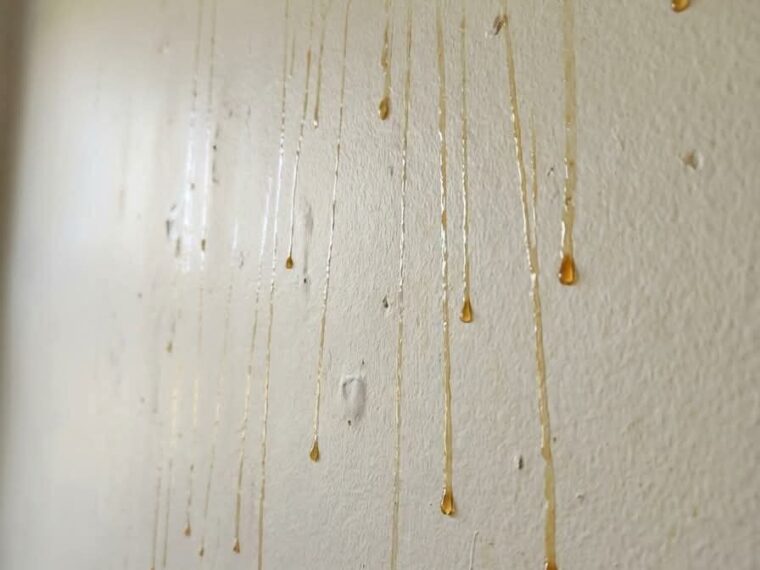
Imagine walking into a property after a tenant moves out, expecting the usual cleanup—maybe a bit of dust, a few scratches, or some minor wear and tear. Instead, you’re met with something far more unusual: thin, sticky yellow streaks slowly dripping down the walls. It looks almost like melted wax or honey, forming droplets that cling to the paint before trailing downward. For many landlords and homeowners, this is both confusing and alarming.
These stains are typically glossy, slightly sticky, and appear randomly across walls or ceilings. They may be more noticeable in certain lighting conditions, especially when natural light hits the surface. The drips can vary in size, from faint lines to thicker drops that gather over time. What makes the situation more unsettling is that they don’t seem to come from a clear source—there’s no obvious spill, leak, or damage that explains their presence.
Because of their unusual appearance, many people initially assume something serious is wrong, like a hidden leak inside the walls or even mold growth. However, in most cases, these yellow drips are not dangerous. They are usually the result of common indoor conditions that have gone unnoticed over time.
Why Is It So Difficult to Clean?
One of the most frustrating aspects of these yellow stains is how stubborn they are. Many people try wiping them away with a damp cloth, only to find that the residue smears rather than disappears. Even after scrubbing, the stains often return, making it feel like an endless battle.
The reason behind this lies in the composition of the residue. These drips are often made up of oily or chemical compounds that bond with the paint surface. Water alone is not effective in breaking them down, and standard cleaning products may not fully remove the buildup. In some cases, cleaning can even make the problem more visible by spreading the residue across a larger area.
It’s similar to trying to clean grease from a kitchen surface without using a proper degreaser. You might remove some of it, but a thin layer remains, and over time, it becomes noticeable again. This is why identifying the root cause is essential before attempting a permanent solution.
Common Causes of Yellow Dripping Walls
Nicotine and Tobacco Residue
One of the most widely known causes of yellow stains on walls is nicotine buildup from cigarette smoke. Over time, smoke particles settle into the paint, creating a sticky film. When humidity rises, this residue can dissolve slightly and begin to drip down the walls.
Even if the most recent tenant did not smoke, it’s important to consider the history of the property. Previous occupants may have smoked indoors, leaving behind residue that remained hidden for years. Once conditions change—such as increased humidity or cleaning—the stains can suddenly become visible.
Surfactant Leaching from Paint
Another very common cause is something known as surfactant leaching. This occurs when water-soluble components in the paint rise to the surface and form visible streaks. These substances are originally added to paint to help with application, but under certain conditions, they can migrate out of the paint film.
Surfactant leaching is more likely to occur in environments with high humidity or poor ventilation. It is especially common in newly painted walls or in areas like bathrooms and kitchens. The result is a sticky, sometimes yellowish residue that appears to drip down the surface.
Humidity and Condensation
Humidity plays a major role in many wall-related issues, and yellow drips are no exception. When warm, moist air comes into contact with cooler walls, condensation forms. This moisture can pull impurities from the paint or from particles settled on the wall, causing them to run downward.
Over time, repeated cycles of condensation can lead to visible streaks. This is particularly common in homes with poor airflow or in climates where humidity levels are consistently high. Even everyday activities like showering or cooking can contribute to this problem if ventilation is inadequate.
Cooking Oils and Airborne Grease
Cooking is another often overlooked source of wall residue. When food is prepared, tiny oil particles are released into the air. These particles can settle on walls and ceilings, especially in kitchens or open-plan living spaces.
As these oils accumulate, they create a thin, sticky layer. When combined with humidity, this layer can soften and begin to drip. Over time, the buildup becomes more noticeable and harder to clean, leading to the kind of stains seen in the image.
How to Identify the Exact Cause
Simple Checks Anyone Can Do
TO CONTINUE READING THE ARTICLE PLEASE SEE PAGE 2