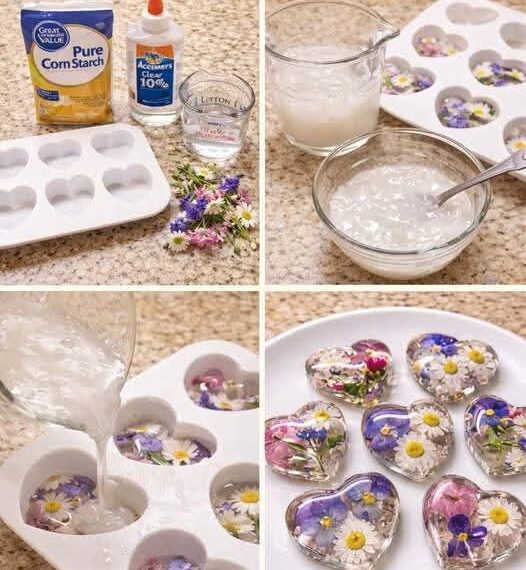
Step-by-Step Instructions
Step 1: Mix the Ingredients
In your saucepan — before turning on any heat — combine one cup of cornstarch, one cup of baking soda, and three quarters of a cup of water. Stir everything together until smooth and completely lump-free. Starting with a smooth mixture before heating is important; lumps that form in the cold mixture become much harder to work out once heat is applied.
Take your time here. A well-mixed base produces a smoother, more even dough that rolls out beautifully.
Step 2: Cook on Low Heat
Place the saucepan over low heat and stir continuously. This is not a step to rush or walk away from — the mixture goes from liquid to dough relatively quickly once it begins to thicken, and stirring constantly prevents lumps and ensures even heating throughout.
As the mixture heats, you’ll see it gradually thicken from a milky liquid to a paste, then to a soft, dough-like consistency. When it begins to pull away from the sides of the pan and holds together in a ball, it’s ready. Remove it from the heat immediately — overcooking will make the dough dry and crumbly.
The whole process takes roughly five to ten minutes on low heat.
Step 3: Cool Until Handleable
Transfer the dough to a plate or piece of parchment paper and let it cool. Fresh out of the pan it will be too hot to handle comfortably. Give it ten to fifteen minutes, then test it — you want it warm enough to be pliable but cool enough that you can work with it without discomfort.
Cover it loosely with a damp cloth while it cools to prevent the surface from drying out prematurely.
Step 4: Add Color
This is where the magic really begins. Divide your dough into as many portions as you have colors. Add a few drops of food coloring to each portion and knead it in thoroughly until the color is even and consistent throughout.
For the translucent glass effect, keep your colors relatively light — more pastel than vivid. Heavily saturated colors look beautiful but block more light, reducing the translucent quality. Soft pinks, watery turquoises, and pale purples let the most light through and give the most convincing “stained glass” appearance.
If you want a marbled effect, fold two colors together just two or three times — enough to create swirls without fully blending.
Step 5: Roll Out the Dough
Working one color at a time, place your dough between two sheets of parchment paper and roll it out to approximately one quarter of an inch thick. Using parchment above and below prevents sticking and produces a smoother surface on both sides of the finished piece.
Roll as evenly as possible — variations in thickness will cause uneven drying and can lead to warping. Take your time and use long, smooth strokes with the rolling pin.
Step 6: Cut Your Shapes
Press your cookie cutters firmly and cleanly into the rolled dough. Lift each shape carefully and transfer it directly onto a clean sheet of parchment paper where it will dry undisturbed.
Gather the remaining scraps, knead them briefly back together, and re-roll to cut more shapes. Continue until you’ve used all your dough.
Flower cutters, heart cutters, star cutters, butterfly cutters — any shape works. The most delicate and intricate designs tend to be the most beautiful once translucent, but simpler shapes are easier to handle for younger crafters.
Step 7: Punch the Hanging Holes
TO CONTINUE READING THE ARTICLE PLEASE SEE PAGE 2