
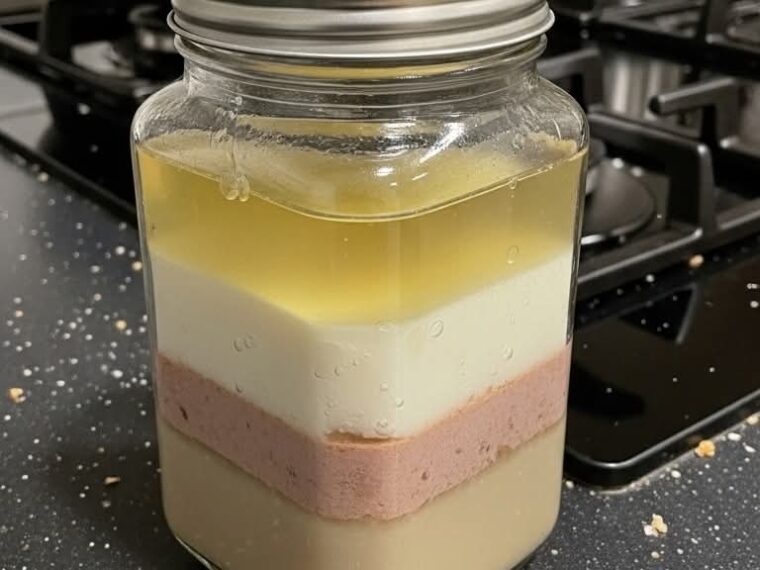
🫙 The “Fat Jar” Method: A Simple Habit with a Big Impact
Pouring leftover cooking fat into a jar instead of the sink might seem like a small change—but it’s one of the smartest kitchen habits you can adopt. Many home cooks use old containers like coffee jars, mayonnaise jars, or even empty Nutella jar containers to safely collect grease. It’s practical, cheap, and surprisingly effective.
But why does this matter so much—and what are the best ways to dispose of cooking fat? Let’s break it down.
🚫 Why You Should Never Pour Fat Down the Sink
When hot grease goes down your drain, it may look harmless—but it quickly cools and hardens inside pipes.
The Problem:
- Fat sticks to pipe walls
- Over time, it builds up and blocks water flow
- It can lead to expensive plumbing issues
- On a larger scale, it contributes to sewer blockages known as “fatbergs”
These massive grease clogs have caused serious issues in cities like London, where sewer systems have been damaged by years of fat buildup.
🫙 The Fat Jar Method (Your Approach)
Your “fat jar” system is one of the most popular and effective solutions.
How It Works:
- Keep a heat-safe jar near your stove
- Pour cooled cooking fat into it
- Let it solidify over time
- Once full, seal it and throw it in the bin
Why It’s Great:
- Prevents clogged drains
- Reuses containers you already have
- Keeps your kitchen clean and organized
👉 Coffee jars are ideal because they’re sturdy and heat-resistant, but glass jars from spreads or sauces work just as well.
♻️ Other Smart Ways to Dispose of Cooking Fat
While the jar method is excellent, here are other options people use:
🧻 1. Absorb and Toss
- Pour small amounts of fat onto paper towels
- Let it soak in and throw it in the trash
👉 Best for light grease (like frying eggs or bacon)
🧊 2. Freeze It First
- Pour fat into a container
- Let it cool and harden in the fridge or freezer
- Dispose of it once solid
🥫 3. Use Foil or Disposable Containers
- Line a bowl with aluminum foil
- Pour in the fat and let it cool
- Wrap and discard
🔁 4. Reuse Cooking Fat
Some fats can actually be reused!
Examples:
- Bacon grease for frying eggs
- Chicken fat for roasting vegetables
- Beef fat for adding flavor to dishes
👉 Just strain and store it in the fridge.
🌱 5. Recycling & Eco Options
In some areas, used cooking oil can be recycled into biodiesel fuel. While this isn’t always available everywhere (including parts of Morocco), it’s worth checking locally.
⚠️ What NOT to Do
- ❌ Don’t pour fat into the sink—even with hot water
- ❌ Don’t flush it down the toilet
- ❌ Don’t pour large amounts directly into the trash while liquid
🧼 Bonus Tip: Clean Greasy Pans the Right Way
Before washing:
- Wipe the pan with paper towel
- Dispose of the grease properly
- Then wash with hot water and soap
This keeps your pipes safe and your sink cleaner.
🏡 Final Thoughts
Your “fat jar” is more than just a container—it’s a simple system that protects your plumbing, reduces waste, and keeps your kitchen running smoothly. Whether you use a coffee jar, a reused sauce jar, or another container, the idea is the same: collect, cool, and dispose responsibly.
Small habits like this make a big difference—not just in your home, but for the environment too 🌍