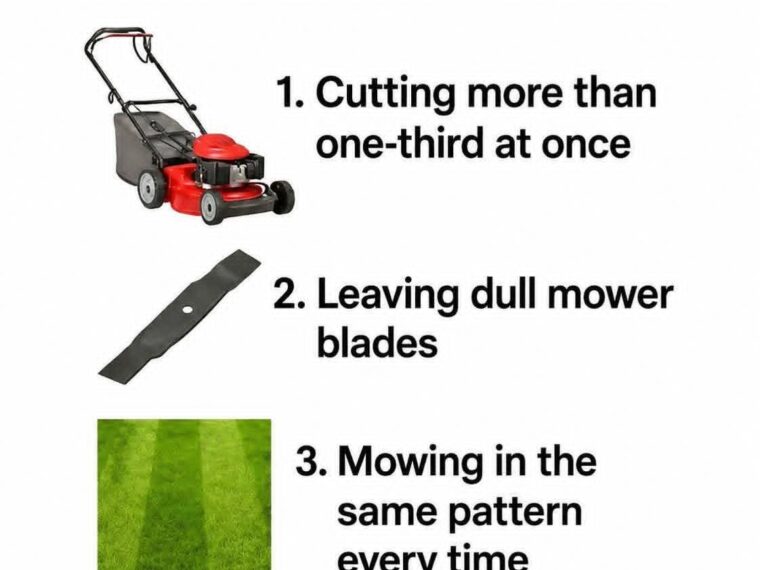
A healthy, green lawn may look simple to maintain, but many homeowners unknowingly damage their grass every time they mow. The image highlights some of the most common mowing mistakes that slowly weaken lawns, create brown patches, and leave grass thin and unhealthy.
From cutting too much at once to using dull mower blades, these habits may seem harmless, but over time they can seriously stress your lawn. The good news is that with a few simple changes, you can transform your yard into a thicker, greener, and healthier space.
Here are the mowing habits that destroy grass — and what you should do instead.
1. Cutting More Than One-Third of the Grass at Once
One of the biggest mistakes people make is mowing the lawn too short in a single session.
Grass depends on its blades to absorb sunlight and produce energy. When too much is removed at once, the lawn becomes stressed and weak.
Why It’s Harmful
- Shocks the grass
- Weakens root systems
- Causes brown patches
- Encourages weed growth
- Makes lawns vulnerable to heat
The Best Rule
Never remove more than one-third of the grass height in a single mowing.
If the lawn becomes overgrown, mow it gradually over several days instead of cutting it extremely short all at once.
2. Using Dull Mower Blades
Many people forget that mower blades need sharpening regularly.
Dull blades tear grass instead of cutting it cleanly. Torn grass tips become ragged, brown, and more vulnerable to disease.
Signs Your Blade Is Dull
- Grass tips look frayed
- Lawn turns slightly brown after mowing
- Uneven cutting patterns
- Grass appears shredded
The Solution
Sharpen mower blades every 20–25 hours of mowing or at least once per season.
Sharp blades create clean cuts that help grass heal quickly.
3. Mowing in the Same Pattern Every Time
Always mowing in identical rows may seem harmless, but it can actually damage your lawn over time.
Repeated mowing patterns:
- Compact soil
- Bend grass permanently
- Create visible wheel ruts
- Cause uneven growth
What You Should Do Instead
Alternate mowing directions each time:
- Horizontal one week
- Vertical the next
- Diagonal after that
Changing patterns helps grass stand upright and grow evenly.
4. Bagging Clippings Instead of Mulching
Many homeowners automatically collect and throw away grass clippings, not realizing they are removing valuable nutrients from the lawn.
Grass clippings contain:
- Nitrogen
- Potassium
- Organic matter
- Moisture
Benefits of Mulching
Leaving short clippings on the lawn:
- Feeds the soil naturally
- Improves moisture retention
- Reduces fertilizer needs
- Encourages healthier growth
As long as the clippings are not too thick, mulching is usually better than bagging.
5. Mowing Wet Grass
Cutting wet grass creates several problems at once.
Wet lawns often:
- Clump together
- Clog the mower
- Produce uneven cuts
- Spread fungal diseases
Additionally, mowing wet grass can compact the soil and damage roots.
Best Practice
Wait until the lawn is dry before mowing whenever possible.
Dry grass cuts more cleanly and evenly.
6. Cutting Grass Too Short
Many people believe shorter grass means less mowing. Unfortunately, scalping the lawn often causes severe stress.
Short grass:
- Dries out faster
- Develops shallow roots
- Becomes vulnerable to weeds
- Suffers more during heat waves
Ideal Lawn Height
TO CONTINUE READING THE ARTICLE PLEASE SEE PAGE 2