
Ideal Lawn Height
Most lawns perform best when kept around:
- 2.5 to 4 inches tall
Taller grass shades the soil and helps conserve moisture.
7. Mowing During Extreme Heat
Mowing during the hottest part of the day places additional stress on already overheated grass.
Hot weather mowing can:
- Burn the lawn
- Increase moisture loss
- Slow recovery
Better Timing
The best times to mow are:
- Early morning
- Late afternoon
- Early evening
Avoid mowing during intense midday sun.
8. Ignoring Lawn Health Before Mowing
Mowing alone cannot fix unhealthy grass.
Lawns struggling with:
- Poor soil
- Compaction
- Lack of water
- Nutrient deficiencies
will continue declining no matter how carefully they are cut.
Healthy mowing starts with healthy soil.
9. Mowing Too Frequently or Too Rarely
Both extremes can harm the lawn.
Mowing Too Often
- Weakens grass
- Creates stress
- Removes too much growth
Waiting Too Long
- Forces severe cutting
- Encourages pests
- Creates clumping
Consistency is key.
A regular mowing schedule based on grass growth works best.
10. Neglecting Mower Maintenance
An unhealthy mower creates an unhealthy lawn.
Dirty or poorly maintained mowers may:
- Spread disease
- Leak oil
- Cut unevenly
- Damage grass roots
Important Maintenance Tasks
- Clean the mower deck
- Check oil levels
- Replace air filters
- Sharpen blades
- Inspect wheels and height settings
A well-maintained mower gives cleaner, healthier results.
The Secret to a Beautiful Lawn
A lush green lawn is not just about watering and fertilizer. Proper mowing habits make an enormous difference in grass health, appearance, and long-term strength.
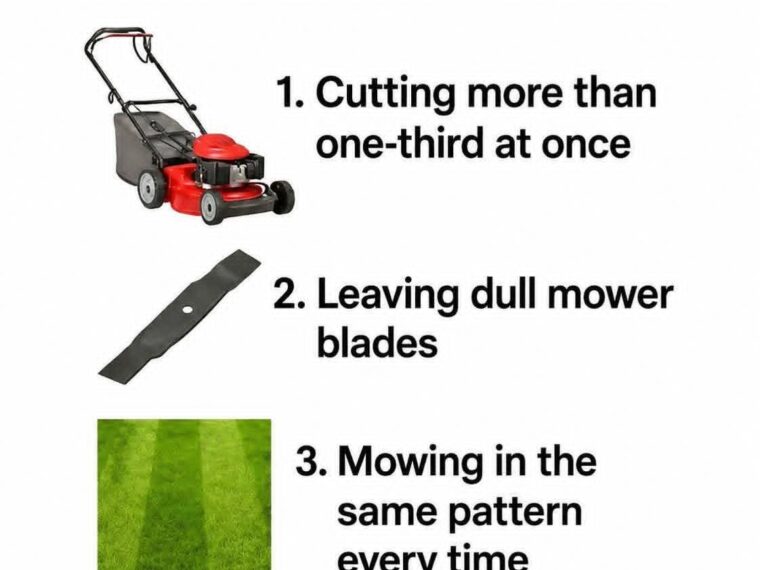
Small changes — like sharpening blades, varying mowing patterns, and avoiding overcutting — can completely transform a struggling lawn.
The next time you mow your yard, remember: healthy grass is not cut aggressively. It’s maintained carefully, consistently, and with the right techniques. 🌿